Tuesday: 60′ Stationary Bike and Incline Treadmill

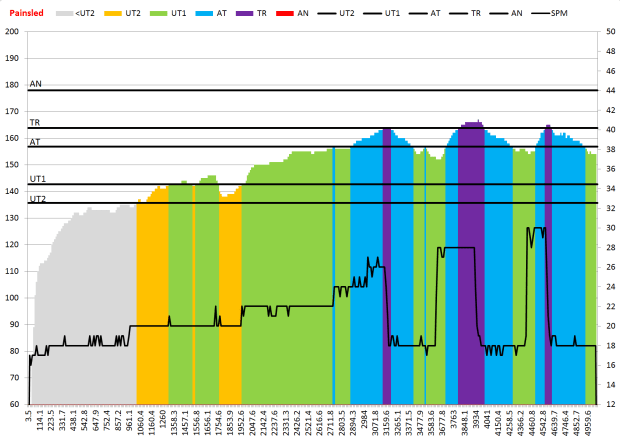
Still in Singapore.  I had a bit less time, so a 60 minute session.  Still trying to keep the intensity low.

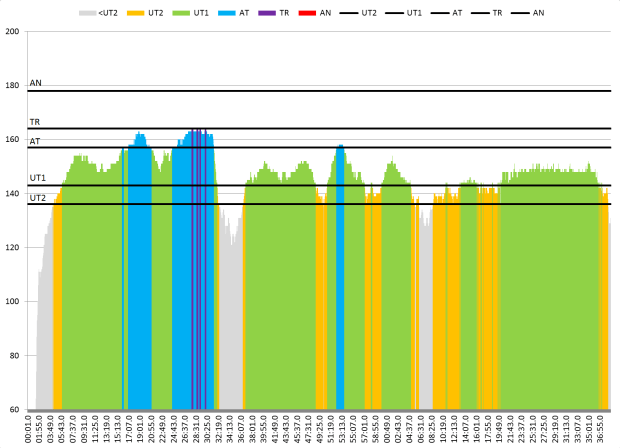
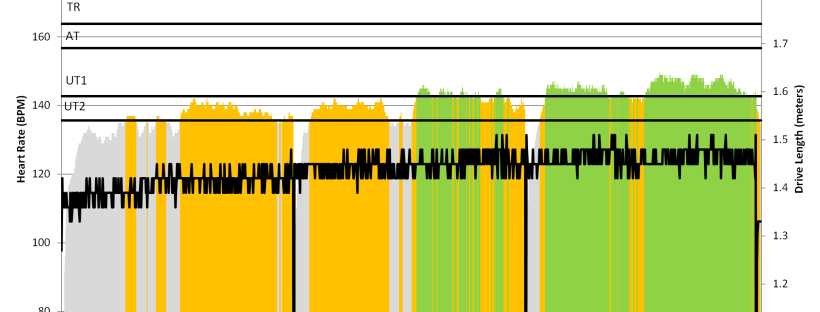
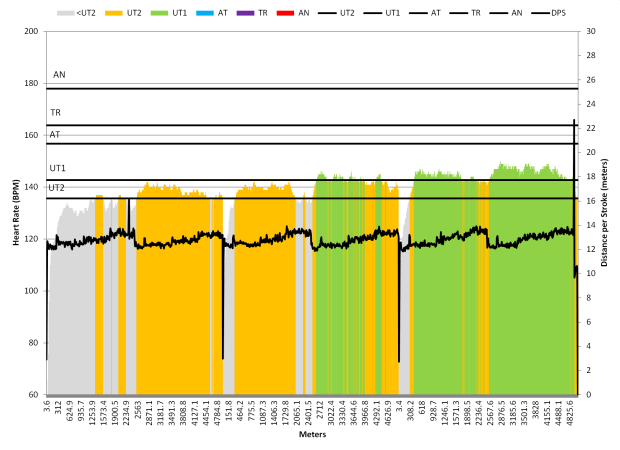
30 minutes on the stationary bike.  This was too easy.

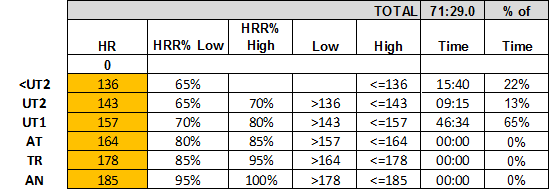
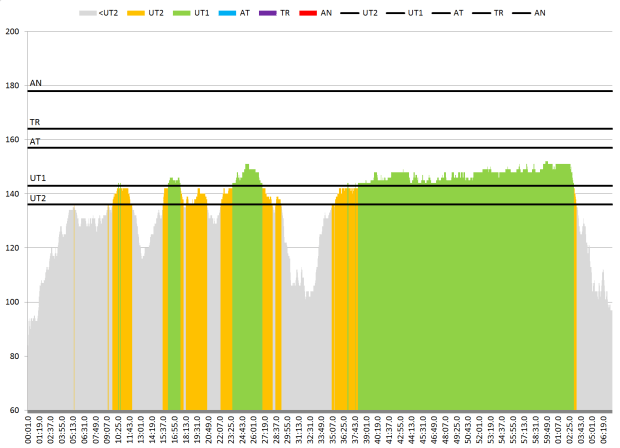
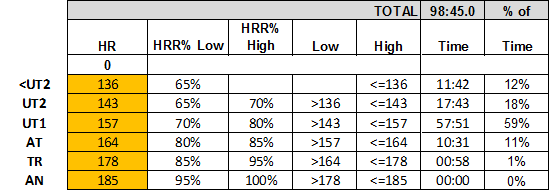
30 minutes on the treadmill with the incline set to max (15% grade).  Then I played around with the speed to keep me right in the middle of the UT1 HR zone.  It worked out to a fast walk around 3.5 mph.

Today the water was flavored with fresh strawberry slices.  Very classy.  I felt bad about the giant sweat puddles I left under the bike and treadmill.

Now, I have moved on to Bangkok.  This hotel has an admirably equipped gym, but still no rowing machine.  I think I might do 60 minutes of aerobic work and a short strength session, just to spice things up a bit.

Monday: Fitness center Triathlon

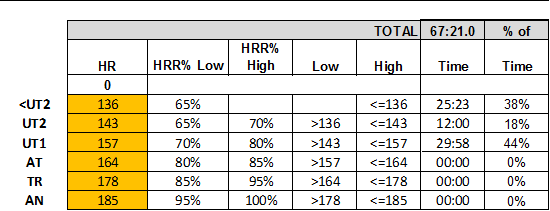
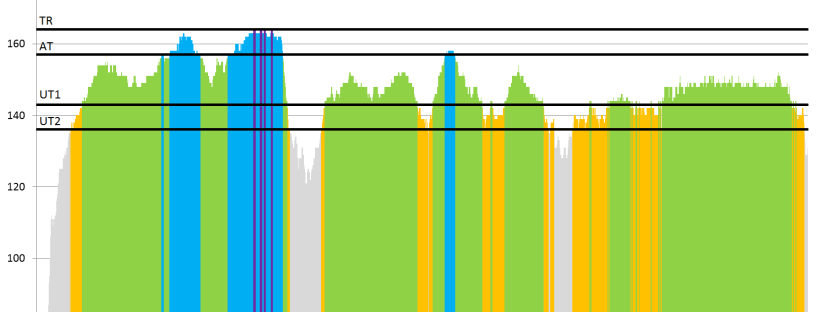
In Singapore at The Regent Hotel.  A reasonably equipped fitness center, but no rowing machines.  30 minutes on the treadmill, then 30 minutes on the stationary bike, then 30 minutes on the elliptical.  A long session, a bit of intesty in the first 30 minutes and then backed off and tried to keep things aerobic the rest of the session.

Remarkably dull and tremendously sweaty.  The highlight was the ice cold water flavored with fresh lemon slices.  A nice touch.


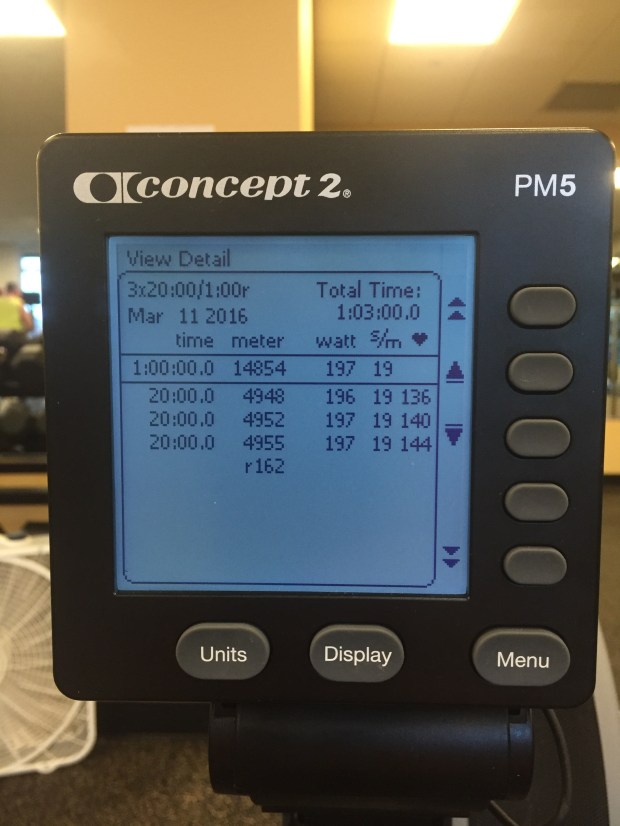
Friday: 3 x 20′ / 1′ rest L4

Felt good this morning.  Higher stroke counts and lower HR.

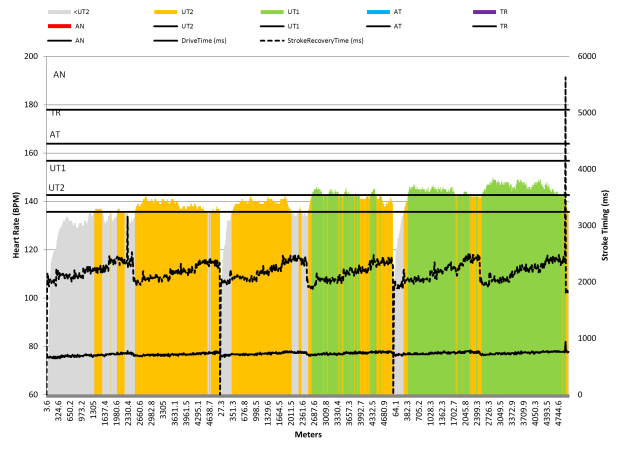
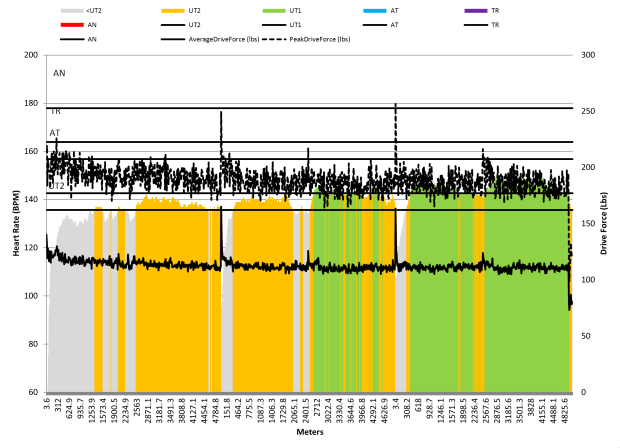
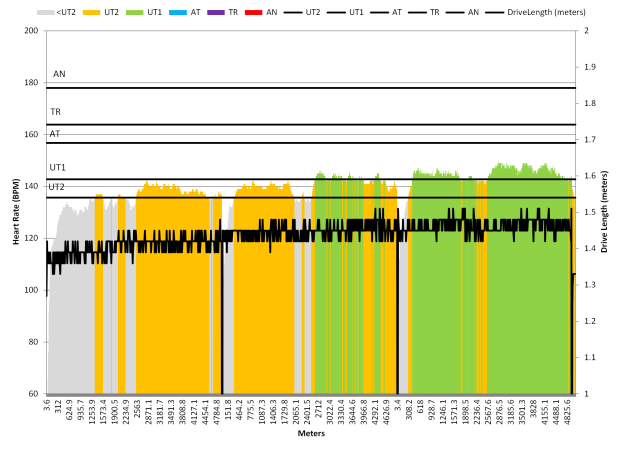
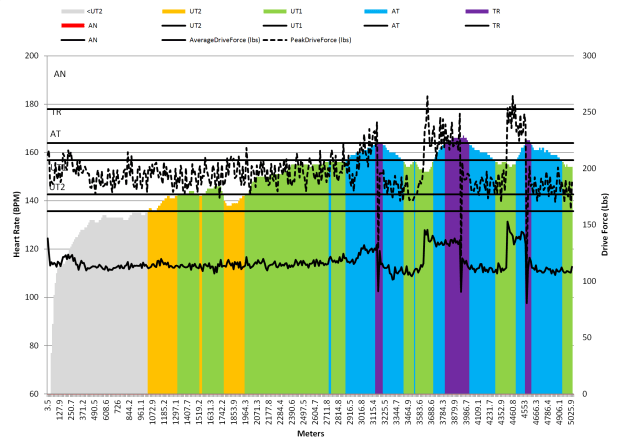
More fun with Pain Sled.  Consistent drive times across stroke rates.  Consistent average force across rates (and peak force too) across rates, but it drops slightly over the hour, and my drive length increases. I have no idea if this a good or a bad thing.

2016-03-11 07.53.42

Painsled review

When I compared Ergstick and Ergdata last week, I wanted to also include Painsled (simple website here), but I is still in it’s beta test phase and was still working through a bug with the developer (Rick Terrell).

By the way, participating in the beta test process has been really positive.  Rick has been very engaged and a steady stream of fixes have been included at a very rapid pace.  The product is nearly done and totally useful in it’s current state.

Painsled is an interesting product concept.  It is multiplatform (iOS, Chrome, Andriod), it works with PM5, PM4 and PM3. The PM3 and PM4 are supported using a usb cable connection, the PM5 via bluetooth).  It provides TCX and CSV output options.  Workout files can be exported from your phone via email, itunes, dropbox, or other iphone options.  In the future, they are looking at export to fitness apps like strava, training peaks, concept2.

When you launch the app you get a simple dashboard, very much like ergdata, which mirrors the data on the PM5, but provides a few additional fields.  I am hoping that some of the other parameters that get logged will become options for the dashboard in the future.  But for my primary use mode, where I start up an app to log my data and then stuff my phone into a holster on my belt, I don’t much care what is going on with the screen.

The data output is TCX format, which I have successfully uploaded to Strava Or CSV.  There are 2 different CSV file format options.  One is a CSV event format which includes a record for every data update that comes from the PM5, so there are lots of records per stroke, maybe 10 or so.  To be clear, this is not like the ergstick force curve data, but rather, and event for each stroke “state”.  I played around with the file, but it is a ton of data and getting plots out of it outstripped my excel coding skills.  In a recent release, they add the CSV stroke format.  This concatenates all the data for each stroke into a single record and ships it out.  This is very cool because that is exactly like the output from rowpro, and one of the ways that data comes out of a speedcoach.  Adapting existing tools to use this data was a simple task.

One of the nice things about painsled is that it provides a richer set of data fields than ergdata.  Here they are:

TimeStamp (sec) : Incomprehensible format, but increments in seconds through the whole workout across all reps and rests.  A nice thing to have for graphs

activityIdx: Unknown

lapIdx : Increments for each interval

pointIdx : As far as I can tell the same data as stroke count

ElapsedTime (sec) : elapsed time for the current interval, resets to 0 at the start of each

Horizontal (meters) : distance within each interval, resets to zero.

Stroke500mPace (sec/500m) : standard pace seconds per 500 (ie 2:00.0 = 120s)

Cadence (stokes/min) : SPM

HRCur (bpm) : Heart rate

Power (watts) : stroke power, watts as displayed by the PM

Calories (kCal) : calories as displayed by the PM

Speed (m/sec) : self explanatory

StrokeCount : strokes with an interval

StrokeDistance (meters) : Yes, indeed directly logged DPS!

DriveLength (meters) : Another good bit of data that ergdata displays but does not log.  painsled ships out for your pleasure.

DriveTime (ms) : How fast you pull!

StrokeRecoveryTime (ms) : How consistently you recover!

WorkPerStroke (joules) : Kinda like watts, but integrated into energy.

AverageDriveForce (lbs):

PeakDriveForce (lbs): I think this is cool, because it gives an idea of how consistent drive force across different rates

DragFactor: This is great because I never remember to look, and it’s good to have it logged.

My specific setup is as follows:

  • Model C or D erg with PM5
  • Wahoo Tikr HR belt connected to the PM5 via ANT+
  • HR sensor also connected via BT-LE to my iphone and logging HR data in the wahoo fitness app (I know I’m obsessive, but it embarrasses me to admit that I do this in writing!)
  • Also running on the iphone, either spotify, or stitcher, or another audio app.

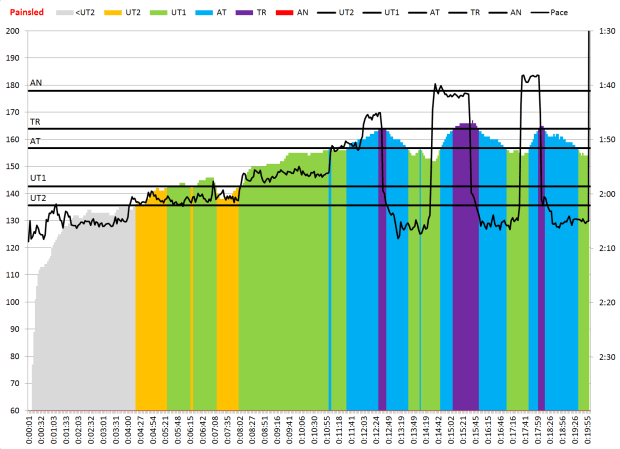
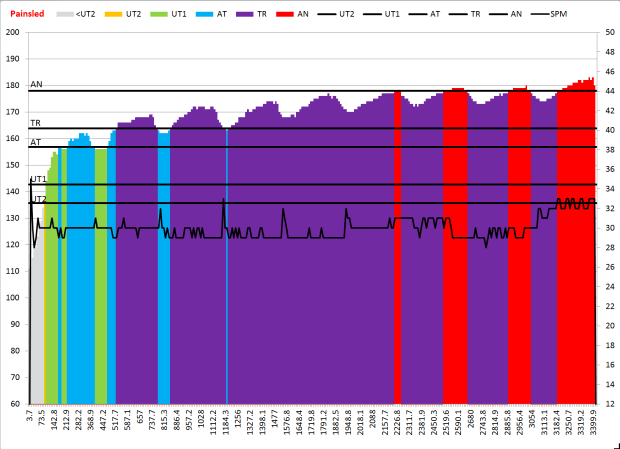
Today, I tried out painsled using this month’s cross team challenge.  I also updated my excel workbook to process the CSV stroke output file.  Here are the outputs for my warmup session today.

A couple of note son the graphs.  I was happy to see that my drive time and drive force was pretty consistent from 18 to 22 SPM, and showed a proportional bump up for the higher rate, higher pressure parts of the warmup.  I was also to happy to see that my drive length was staying consistent through all the rates and did not get shorter as my rate went up.  So, yay for me!

The CSV file has the data to generate splits and tabular summaries, but I haven’t done that work yet.  If anyone wants what I have now, drop me a line.

By the way, I am very happy with Painsled and recommend it to any data junkies out there.  The only down side is the lack of direct integration with the Concept2 logbook.  If that is added, then I think it matches all my needs!
 

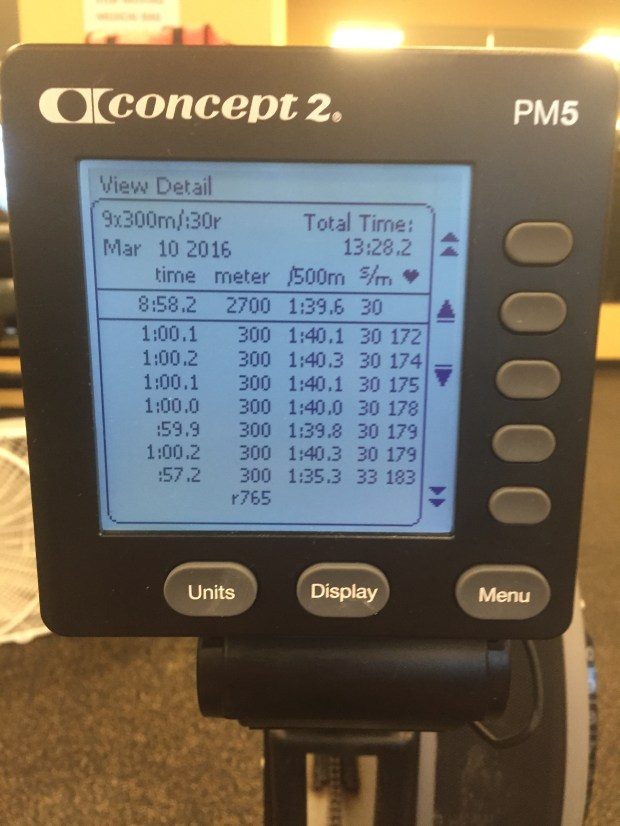
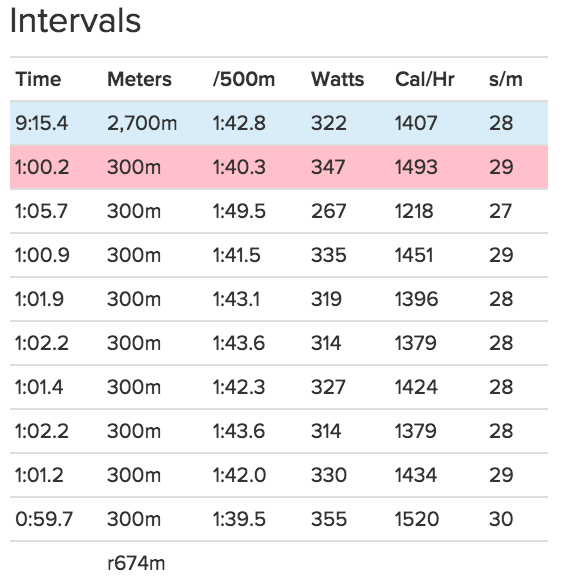
Thursday: 9 x 300 / 30″ rest – March CTC (Better)

I felt better today in the warmup and in the main set.  I set a target of 1:42 and I was able to beat it on each interval.  Mainly I focused on trying to keep my stroke rate pegged at 30 and my strokes long and smooth.

  • Last time, total time 9:15.4 (1:42.8 pace)
  • Today – Total time 8:58.2 (1:39.6 pace)

Very happy with this workout.

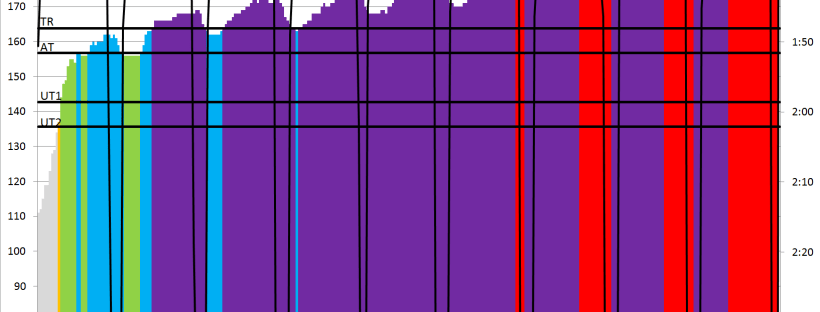
I also used Painsled, which worked perfectly.  I’ll do a separate post reviewing it, but here are the plots from the workout.

The warmup:

The main set:

The cool down


Tomorrow:  3 x 20′ / 1′ L4

Wednesday: 3 x 20′ / 1′ rest L4

Decided to stick with an easier stroke sequence today, but I still ended up working a bit too hard (judging by HR and RPE).

Today I did 6 repeats of 2′ @ 18, 2′ @ 19, 2′ @ 20, 2′ @ 19, 2′ @ 18.  At 10W per stroke, this should yield about a 188W (2:03.0 pace).   As I usually do, I ended up about 4W above that.

Tomorrow:  Another go at the CTC, target pace 1:41.


Tuesday: 3 x 20′ / 1′ rest L4 (slog)

Felt tired today.  Scaled back stroke counts in the last 40 minutes, but HR was still high.  I guess I dug pretty deep yesterday or I’m accumulating some fatigue.

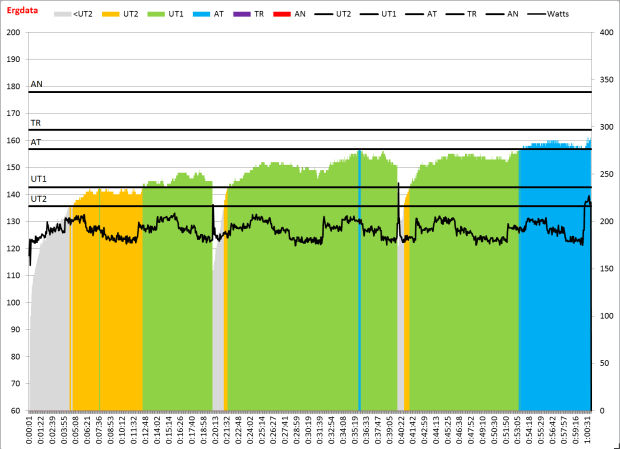
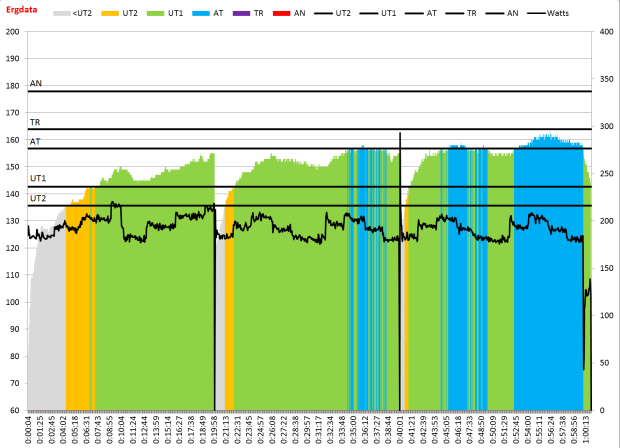
Ergdata worked perfectly again!

Screen Shot 2016-03-08 at 11.09.00 AMScreen Shot 2016-03-08 at 11.08.46 AMScreen Shot 2016-03-08 at 5.38.21 PM.png

Tomorrow:  Same as today.

I received an updated painsled beta today and tried it for a quick 100m test piece.  The fatal error has been fixed and two critical features for me have been added (csv format stroke file, and seamless dropbox export).  If folks are looking for a PM5 to TCX solution, I think it’s worth a try.  I’ll give a proper tryout and write something up after this week is over.

Monday: March CTC – 9 x 300 / 30″ rest

I haven’t done a speed session since my aborted 2K time trial 9 days ago.  Since then I have missed a bunch of days training due to illness and travel.  And even before that, my training was pretty disrupted for the two prior weeks.  Basically, I blew my chance to peak.

That brings us to today.  I did nice steady state sessions Saturday and Sunday, and today, it was back to my normal schedule.  Up at 5:15AM, and working out in the gym first thing.

With too little sleep and a short turn around time after my session yesterday afternoon, there were a couple more excuse codes that I can draw on for today’s session.

Looking at some of the early CTC results, it looked like folks could do it at 2K pace or maybe 2K – 2.  So, I was hoping that I could hold a 1:40 pace.

So, how did that work out for you Mr. Smith?  Not well….Not well at all. But we’ll get there in time.

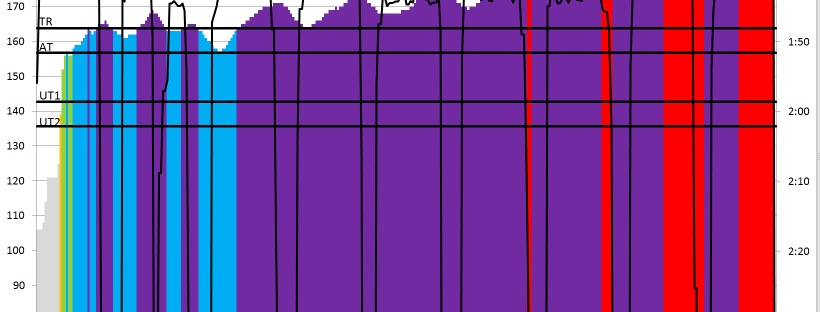
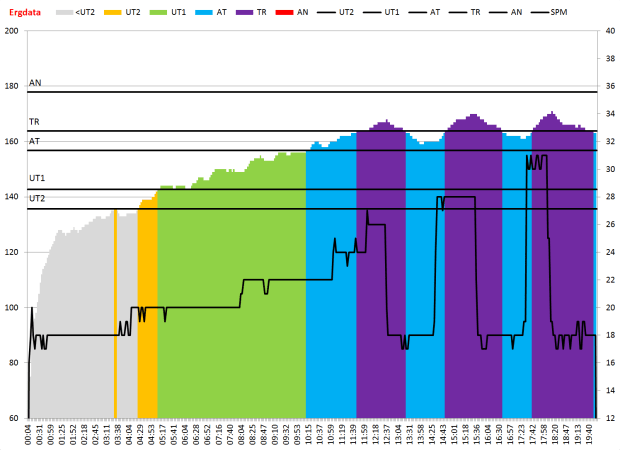
I started with a fletcher warmup, which showed alarmingly high heart rates

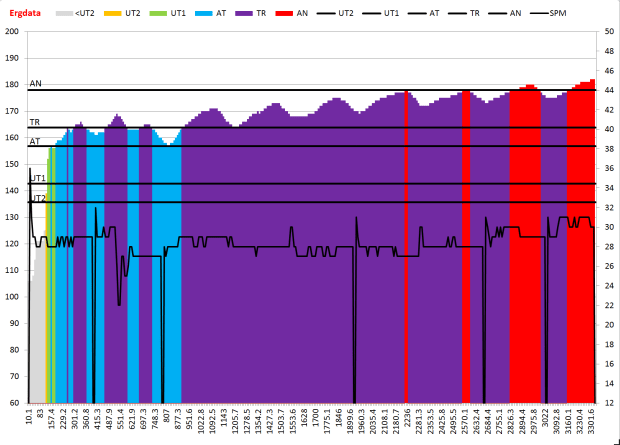
Then in to the main event.  I went out trying to hold 1:40 in the first rep and it hurt.  A lot.  I was barely recovered by the start of the second rep, and blew up half way through.  I reset to a target of 1:43, just to get a score into the CTC.  The rest was uneventful, but quote taxing.

I was pretty well shattered after that.  I did a 2K cool down and staggered to the locker room.

Screen Shot 2016-03-07 at 8.47.51 AM

I think I will give this one another try later this week, maybe on Thursday.  I think I can probably pull off a 1:41 or so given the right attitude.

Tomorrow:  3 x 20′ L4


Sunday: 3 x 20′ / 1′ rest L4

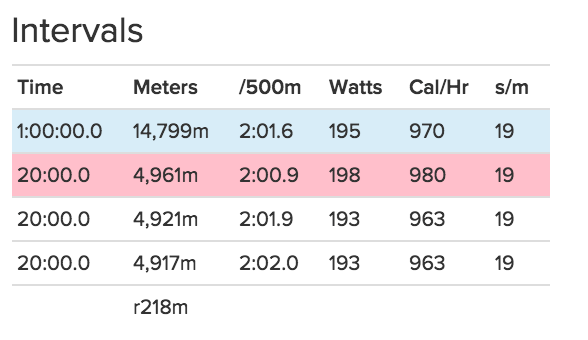
I thought about doing 80 minutes, but decided to stop after 60.  It was a lovely workout. Today, I did 3 – 20 minute segments. Each segment was

  • 3’@18, 3’@19, 3’@20, 2’@21, 3’@20, 3’@19, 3’@18
  • Every thing at 10W x spm (18 spm = 180 watts, etc)

This seems a bit harder than other arrangements of the same stroke rates because you have 8′ at 200W or above in  the middle of each section.  Makes the time go by a bit faster too.

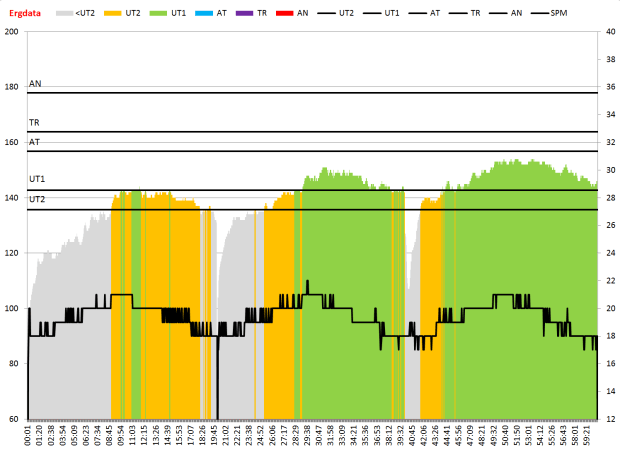
I used ergdata today with the PM5.

Screen Shot 2016-03-06 at 5.43.03 PMScreen Shot 2016-03-06 at 5.41.26 PMScreen Shot 2016-03-06 at 5.39.50 PM


Tomorrow:  I might give the CTC a try 9 x 300 / 30″ rest.  I’ll start at a 1:40 and see where that takes me.