Concept2 Dynamic – Product Review

A couple of weeks ago, I brought my Model D down to our house on the cape and left it there.  I had made up my mind that I wanted to have a rowing machine in both places, since we are spending more time there off season than I had imagined, and even in season, there are a fair number of days where the conditions are not amenable to rowing.

I decided to replace it with a Dynamic.  I have always been better on a static erg than I have been on slides, and I hope that if I can spend more time rowing on slides or on a dynamic machine, that I will be faster in the boat as well.  My plan is to move my slides from work down to the cape, so I can row on slides there.

The Dynamic is more expensive than a Model D ($1250 vs $900) and Concept2 seems to go out of their way to avoid selling it.  The other rowers can be ordered online.  To buy the Dynamic, you have to call the up and basically convince them to sell it to you.  I chatted with the sales rep for a while and he told me that they had a big problem with people who bought it because it had a smaller footprint than the model D, but then were dissatisfied when it was so different from what they had used at the gym.  He said that they only want to sell it to people who have tried out or are on the water rowers.

They shipped it quick.  It arrived within a couple days of me ordering it.  It comes in two large boxes.  Putting it together is non-trivial.  It took me the better part of an hour, and would have been easier if I had a second person for a few of the steps.

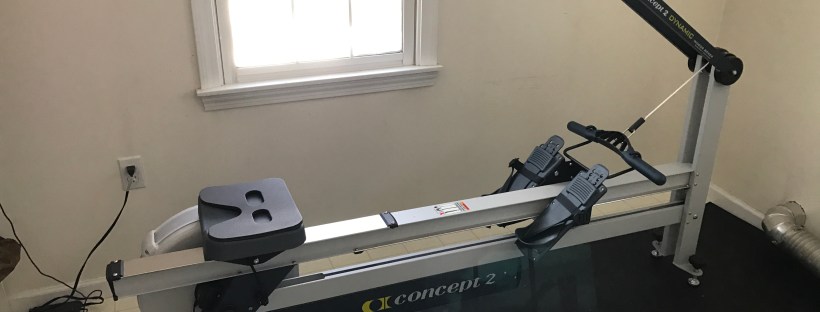
The mechanism of the dynamic is interesting, and complicated.  Start with the side view of the rower.
2-12z

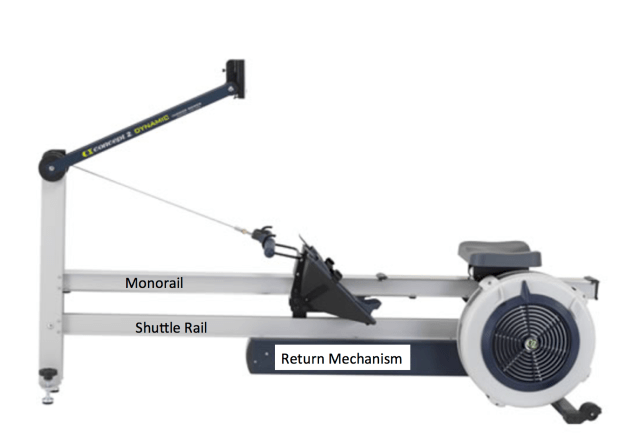
The seat runs on a short rail and is constrained by a short piece of shock cord.  The foot stretcher rolls on the same rail and can move quite far, from the vertical bar at the front of the rower all the way back to the position shown.  The footstretcher is weighted, basically to provide a similar mass as a single rowing shell.  There is a hook on the bottom of the footstretcher that extends into the shuttle rail below.  The shuttle rail is where the magic starts.  Here is a diagram that I put together from the online documentation about the dynamic

2-12b.png

The handle cord comes into the shuttle rail, goes back through a pulley and terminates at the footstretcher hook.  When you pull the handle and the footstretcher in the drive phase of the rowing stroke, the pulley is pulled forward in the shuttle channel.

The drive chain runs through another pulley that is connected to the handle cord pulley.  The chain is terminated on one side and the other side goes around the flywheel drive gear and then down into the handle return mechanism.

Now things get byzantine.  The drive chain goes back and forth through two pulleys before terminating in a pulley assembly that is connected to the end of the handle return shock cord.  The shock cord runs around two fixed pulleys and is terminated on the side of the mechanism.  The whole point of all of this is to provide a consistent return force over the whole span of the recovery.  You need a lot of shock cord so that it is not pulling hard at full extension and not pulling at all at the catch.

The good part about all this is that the connection to the flywheel is just about exactly the same as on the static so it is remarkably consistent feeling to the static erg.

Like any design, it has pluses and minuses.  The pluses are a small footprint, dynamic operation, and a very solid feel.  It’s also nice to be higher off the floor, like on a Model E.  The biggest minus is noise.  The chain is going over a lot of different gears and traveling in metal channels.  All of that is a new source of noise in addition to the whooshing of the fanwheel.  It’s kind of a clattery, grindy kind of noise.  The kind of noise that you would get if you are running chains around gears through metal channels.  I assume I will get used to it, but I have to play the music a bit louder to hear over the noise.  I’m also trying to add a bit of oil to the chains to try to smooth it out a bit.

I find it quite easy to row on the dynamic.  On slides, I would have trouble with bouncing around a bit, but on the dynamic, I have no trouble.  One good thing about the dynamic is that the load at the catch is much faster and crisper than on the model D.  There isn’t that 6 inch section of the drive where you don’t have much resistance.

So far I have done an easy hour, and it was a bit more taxing than rowing on the model D.

 

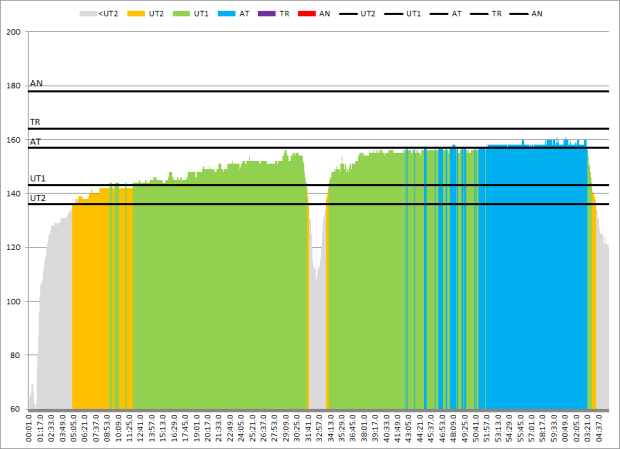
2 x 30′ / 2′ rest at Crossfit Del Mar

I’m in San Diego.  I went over to Crossfit Del Mar, paid my drop in fee and grabbed an erg.
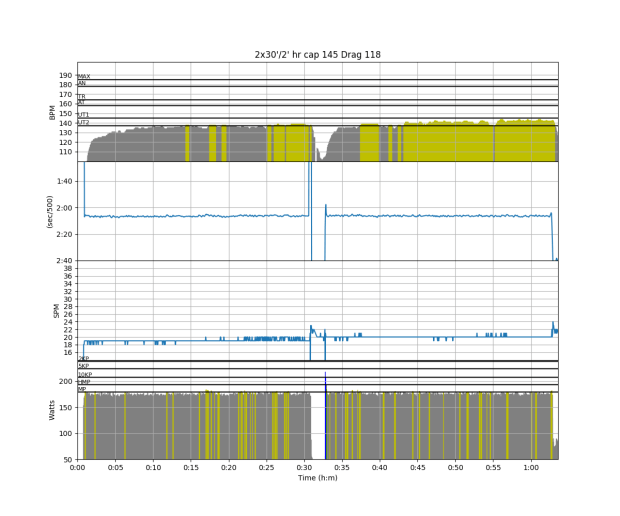
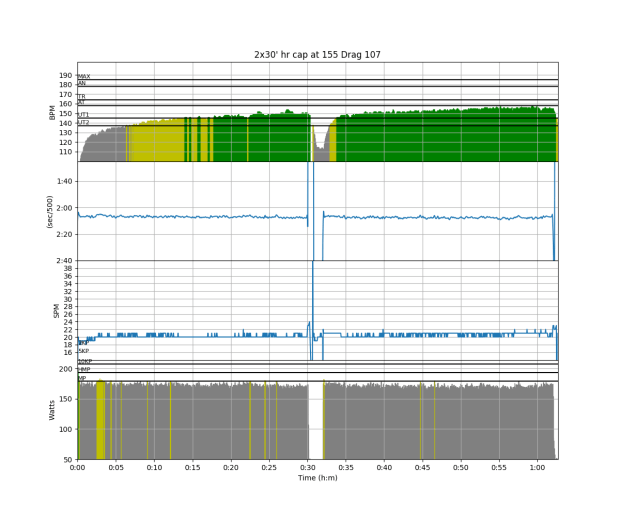
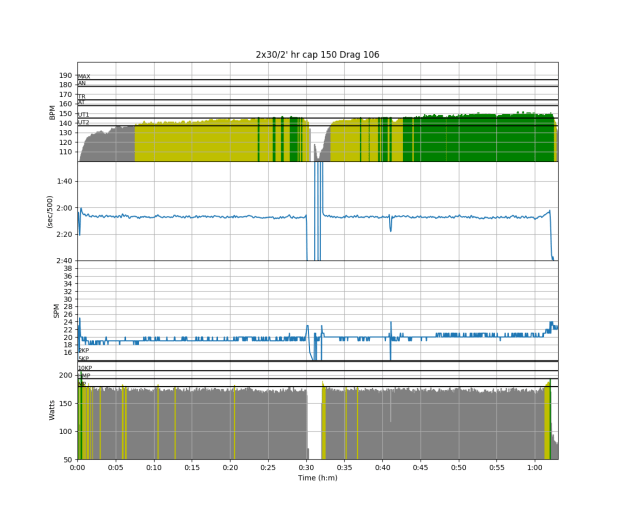
Plan: 2 x 30′ @ MP HR cap at 155

I ended up busting the cap in the last third of the 2nd piece.

2-8a

I’m on the red eye tonight back to Boston.  Hopefully, I will get in.  There is snow in the forecast.  Lot’s of snow.


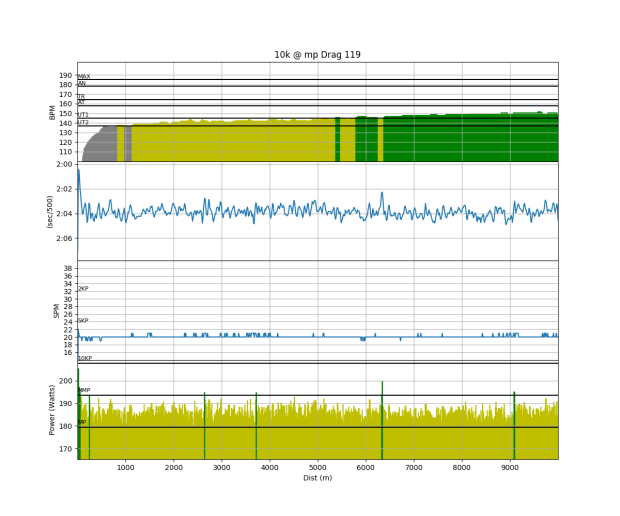
Friday: 10K @ MP

I didn’t have much time this morning, so I did what I could.

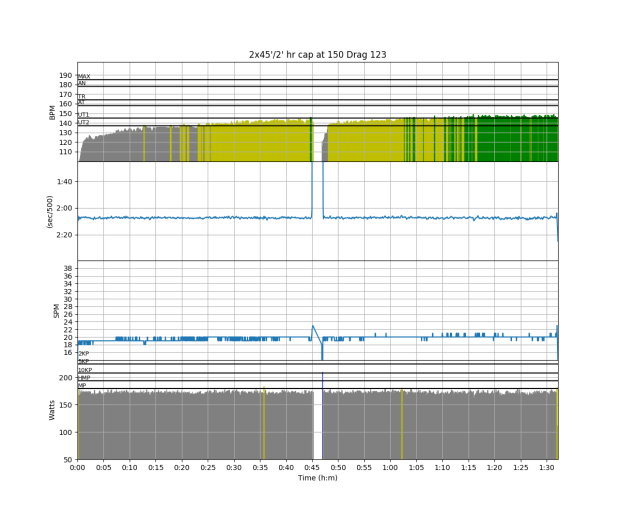
Plan called for 2 x 45′ at marathon pace.  I only had about 40 minutes because I had an early meeting I needed to get to, so I subbed in a 10k at the same pace.

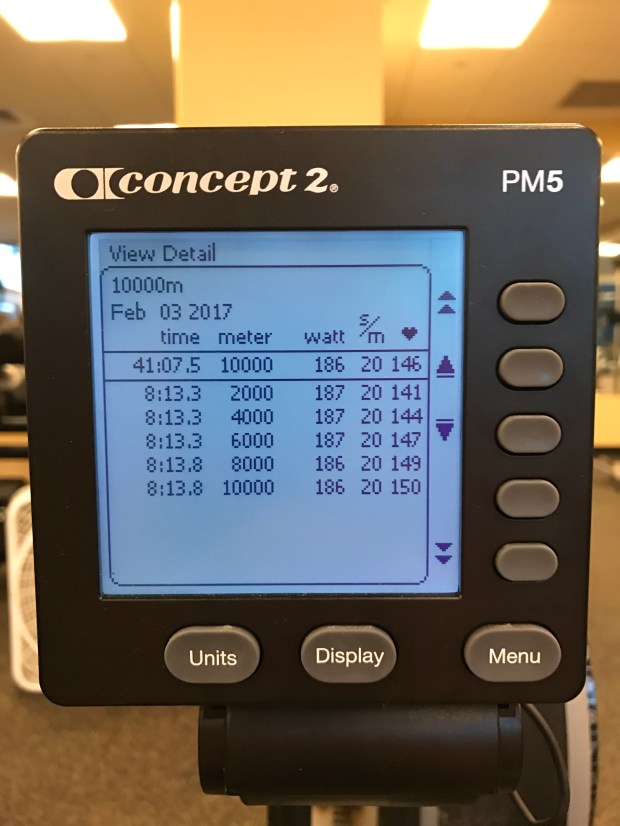
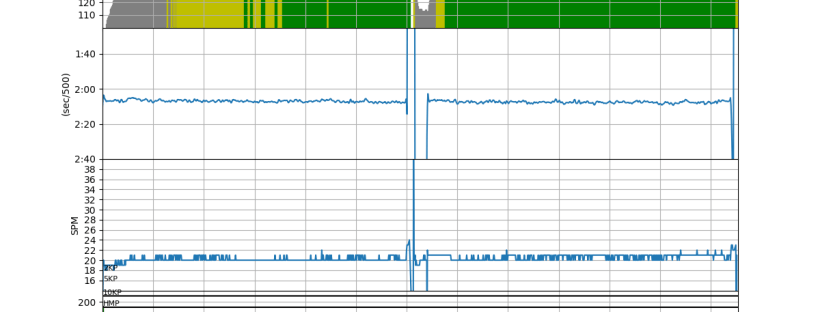
These workouts are supposed to be done with a HR cap, and today was no exception.  I decided  to row against a cap of 150 (80% of HR max).  Since I’ve had such great sessions the past couple of days, I decided to start off at 185W and see how long I could hold it before I needed to back off to stay under the cap.  Turns out I made it  the whole way.  It was another good workout.  If I was doing another 45 minutes, I would have had to back off, but still.  It was better than the HR response I was seeing at 170W just a week ago.

2-3f

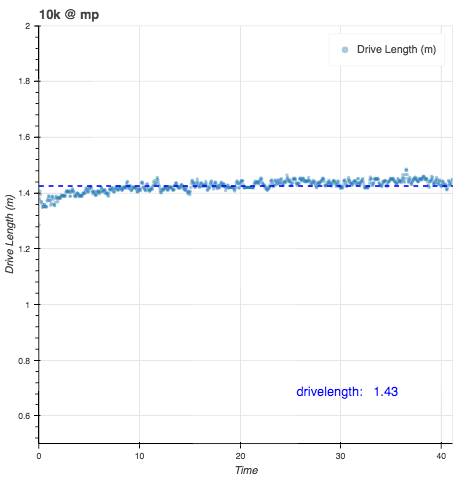
A few stroke metrics, just for fun.

Pretty consistent.

I’m posting this from the BA lounge at Logan airport.  I board for Narita, connecting to Korea in about 45 minutes.

Maybe the Sheraton in Seoul has an erg.  (But I doubt it).


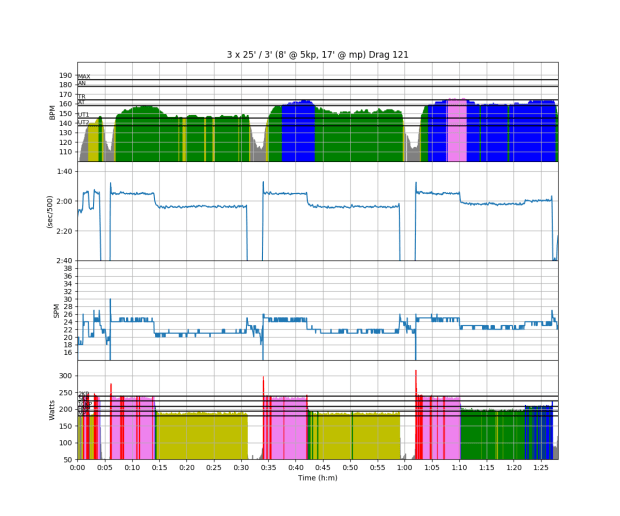
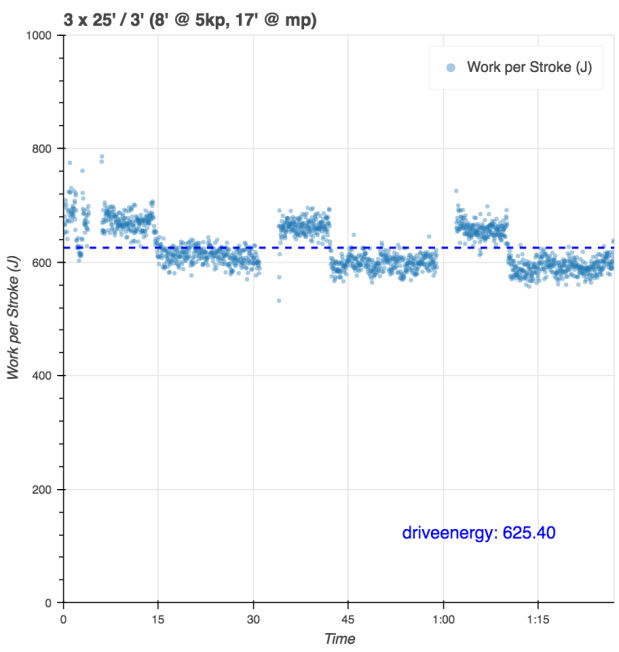
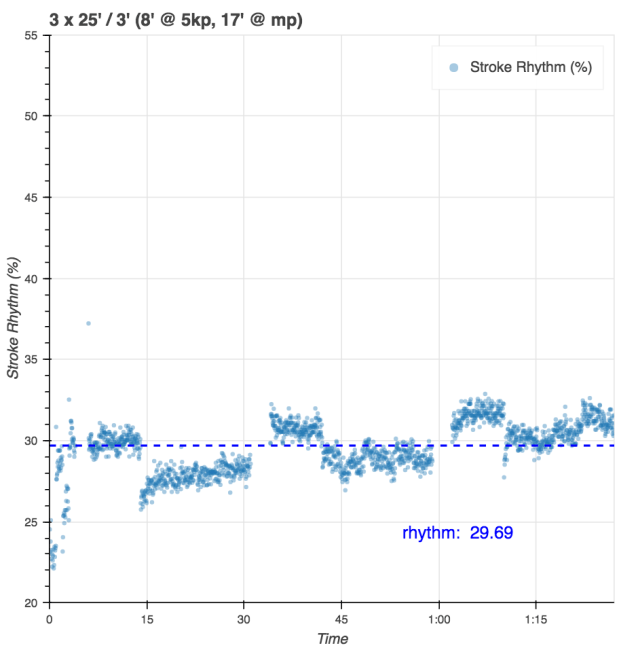
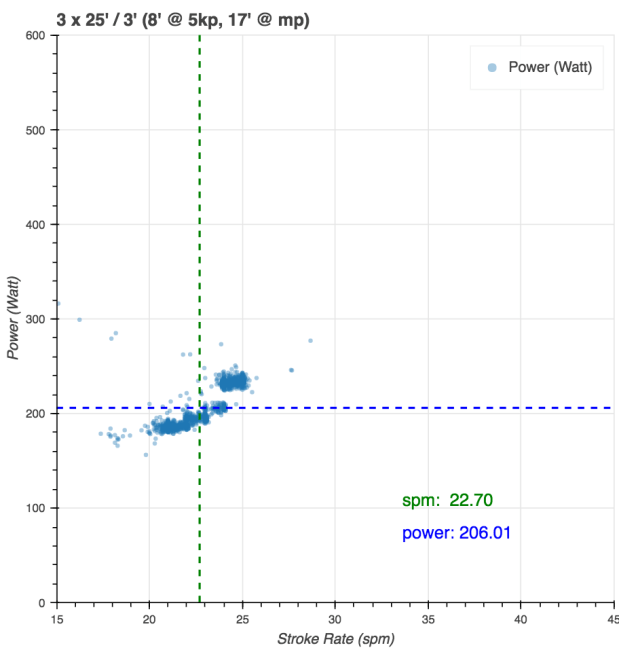
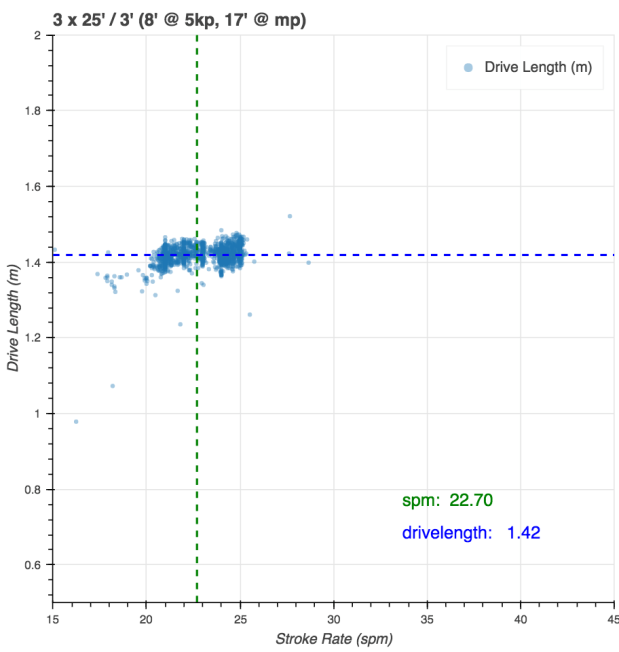
Thursday: 3 x 25′ / 3′ rest (8′ @ 5kp, 17′ @ mp) – Breakthrough workout

I was a bit intimidated by this workout.  It wasn’t that I thought I would fail, I was pretty certain that I would complete it successfully.  Rather, I was dreading the 17 minutes at marathon pace.  In previous attempts at these step down workouts, I dug so deep in the 5kp section that the marathon pace sections were very taxing.  My HR stayed high and it was miserably hard work.

I was surprised and delighted today.  This workout didn’t feel easy, but I felt really good throughout.  My HR was way lower than any workout like this that I’ve done over the past few weeks.  I felt so good that I did the last 5 minutes at half marathon pace.

2-2k

Workout Summary - media/20170202-1405210o.csv
--|Total|-Total-|--Avg--|-Avg-|Avg-|-Avg-|-Max-|-Avg
--|Dist-|-Time--|-Pace--|-Pwr-|SPM-|-HR--|-HR--|-DPS
--|21146|90:00.0|02:07.7|193.5|22.7|151.1|166.0|10.4
W-|19796|79:00.0|01:59.7|204.8|22.6|152.8|166.0|11.1
R-|01354|11:00.0|04:03.6|069.6|22.7|135.5|166.0|02.9
Workout Details
#-|SDist|-Split-|-SPace-|-Pwr-|SPM-|AvgHR|MaxHR|DPS-
00|01011|04:00.0|01:58.7|210.9|21.8|129.7|147.0|11.6
01|02096|08:00.0|01:54.5|233.0|24.3|151.1|158.0|10.8 -target 225-240
02|04137|17:00.0|02:03.3|186.9|21.0|147.3|156.0|11.6 -target 180-195
03|02096|08:00.0|01:54.5|233.4|24.4|155.5|164.0|10.7 -target 225-240
04|04135|17:00.0|02:03.3|186.6|21.4|153.1|163.0|11.4 -target 180-195
05|02099|08:00.0|01:54.3|234.6|24.7|156.7|166.0|10.6 -target 225-240
06|04222|17:00.0|02:00.8|198.8|23.0|161.0|166.0|10.8 -target 180-195

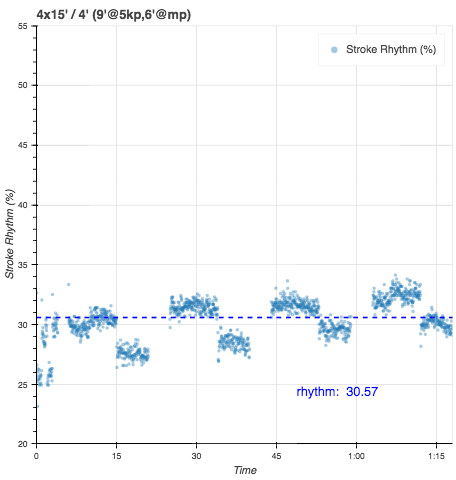
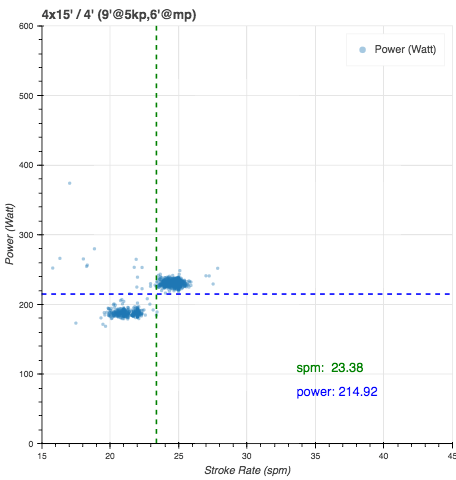
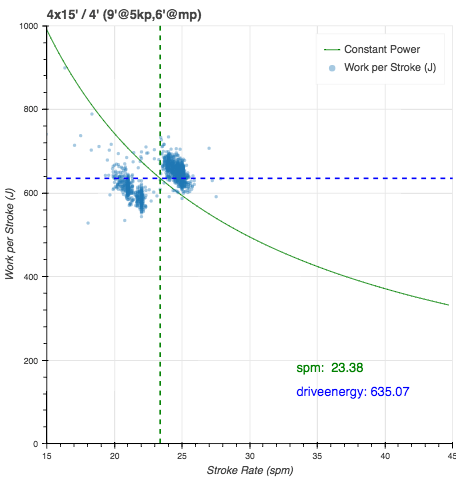
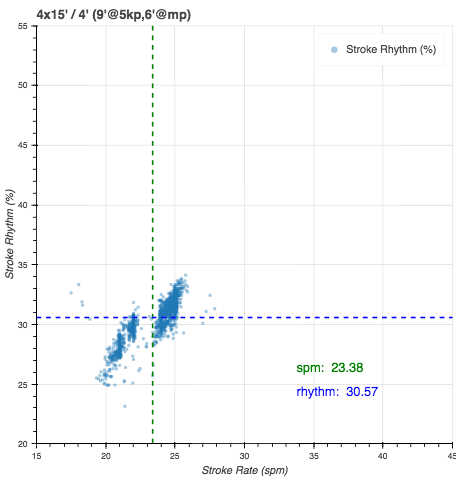
I looked through the metrics.

  • A little bit of drive length variation in the last interval
  • peak force varying with power
  • you can see the same thing in the work per stroke.  I was effectively underrating the fast stuff and over rating the slow stuff
  • I see more variation in rhythm today.  Not sure why

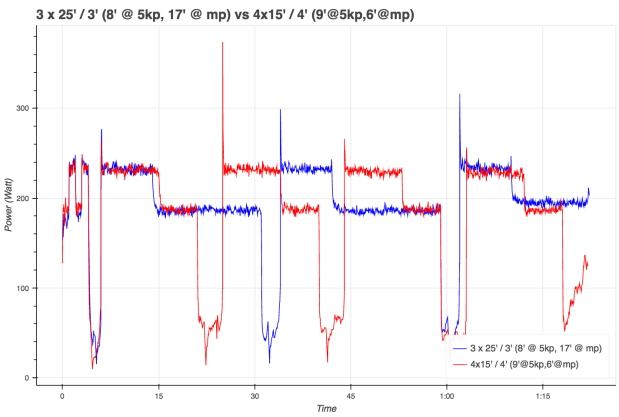
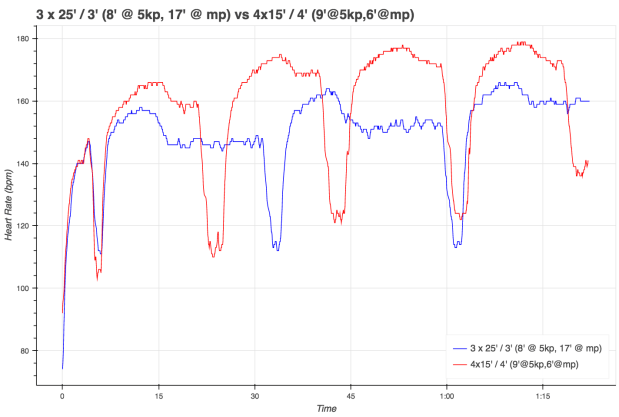
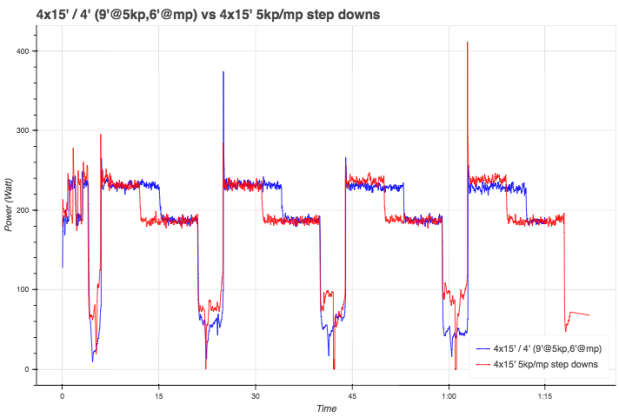
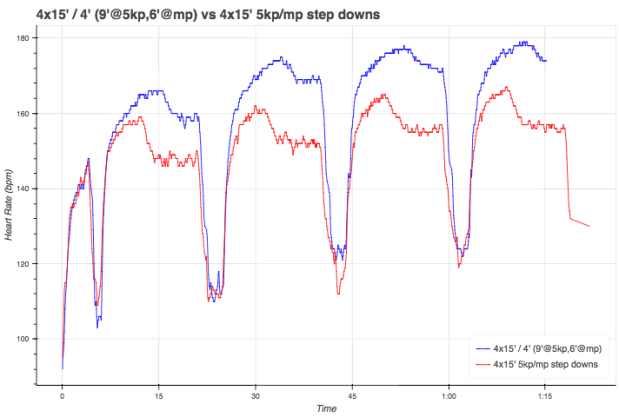
Comparison to the 4 x 15′ (9′ @5kp, 6′ @ mp) workout form earlier this week.

  • Same powers, just different durations so it gets a bit confusing after the first rep.
  • Nearly identical stroke rates for the faster bits.  A bit lower for the slow today (because I felt fantastic)
  • The difference in HR is astounding.  My HR didn’t go nearly as high in the 5kp sections, and it recovered better in  the mp sections.

So, why was it better?

  • time of day: nope…same for both
  • nutrition state:  nope…fasted for both
  • amount of sleep: nope…~6.5 hours before both
  • temp/humity: nope…same for both
  • accumulated fatigue:  If anything I should have been worse today.  This is the 7th day in a row that I have rowed.  This session and the prior one were rowed the day after a low intensity 60 minute endurance session.

So, I am left with random variation and improved fitness.  I think there is lot of the former, and a little of the latter.

Tomorrow:  Probably nothing.  I have an early meeting, and then I head off to the airport for a trip to Korea.  I’ll be off the erg for a week.  I’m pretty bummed about that, I was just starting to see progress.

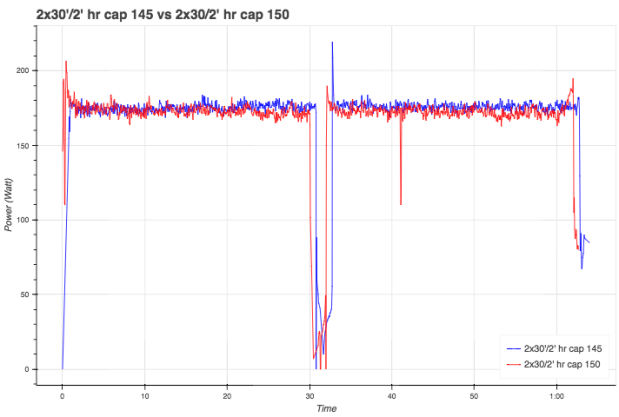
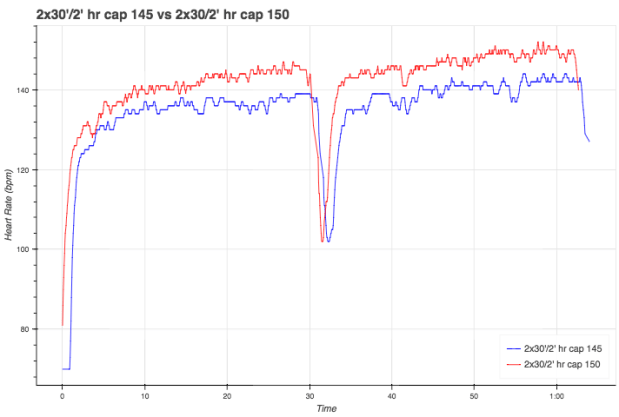
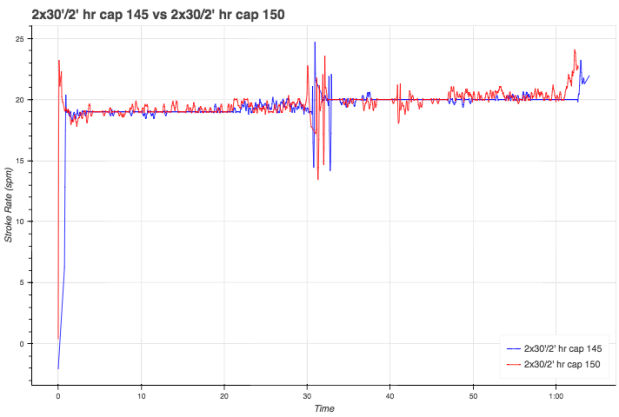
Wednesday: 2 x 30′ / 2′ HR cap at 145

Wow!  Very low HR and RPE.

2-1d

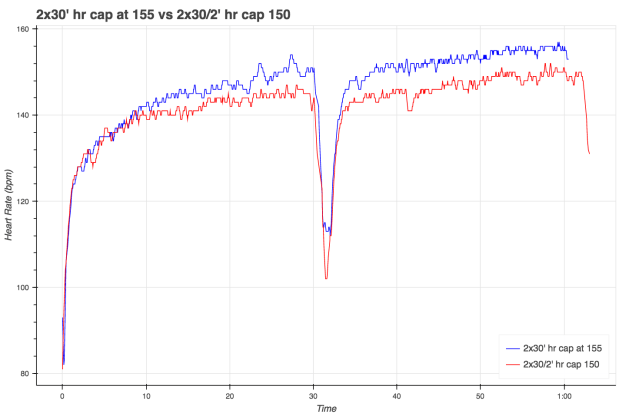
Quick Comparison to this same workout on Saturday.  Time of day was similar, nutrition state was similar (fasted), I got better sleep on Friday night, and the room was colder on Saturday.  Despite two factors leaning in favor of lower HRs for the Saturday session, it was nearly 10 points different at the end.  (Today’s session is in blue)

Tomorrow:  A session straight from the mouth of hell.

M1 3 x 25′ / 5′ 8′ @ 5KP, 17′ @ MP 92.5% (172)

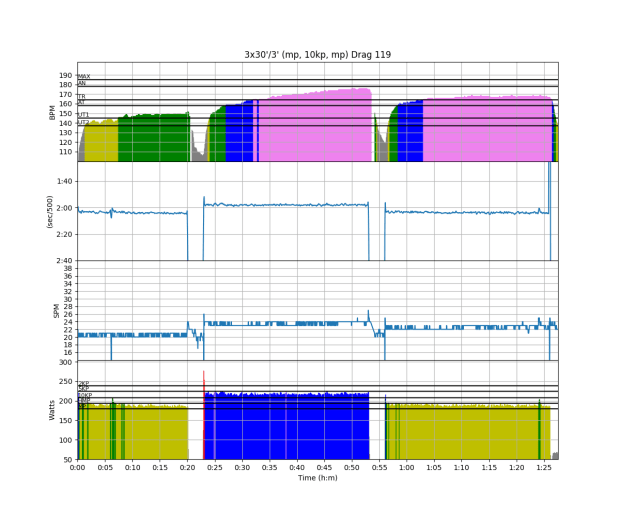
Tuesday: 3 x 30′ / 3′ rest (mp, 10kp, mp)

When you write it in shorthand, it doesn’t look that bad, but it is a whole lot of rowing.  90 minutes of rowing, 60 minutes of it at a little bit above my endurance pace, and 30 minutes of it a lot faster than my endurance pace.

This was a monster of a workout.  The EF marathon plan does not feature the acute pain of the Pete Plan, but it is designed to put you into chronic oxygen debt and elevated lactate levels for VERY LONG PERIODS OF TIME.

The way I was thinking about this workout is this:

  • The first 30 minutes at MP is basically like doing the first 30  minutes of a marathon
  • The second 30 minutes at 10KP is faster than marathon pace to build up a really good oxygen debt and lactate load, that gets delivered to the last 30 minutes
  • The last 30 minutes at MP is like the last 30 minutes of a marathon.  You are rowing at a comfortable pace, but you have a big debt that you can’t pay off.  (That’s as fun as it sounds)

I did the 20 minute flavor of this workout before, and the extra 10 minutes at 10KP is brutal!

I had a hangup with the PM5 and Painsled.  I think it was related to using ANT+ for HR data.  It froze up on me about 8 minutes into the first mp interval, so I stopped at 10 minutes, reset the PM, and programmed a 20’/30’/30′ variable interval session.  There wasn’t much to look at for the first 10 minutes anyway.  I aimed at 185W, I did 187W.

Here is the rest of the session from painsled.

1-31a

I was never seriously considering quitting, but boy that middle 30 minutes lasted forever.I decided to ignore the HR cap, basically because I’m a prideful idiot.

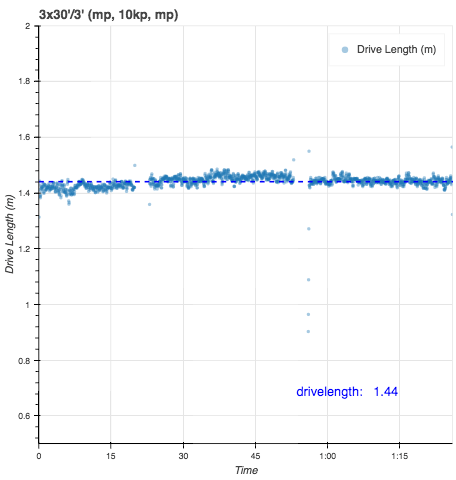
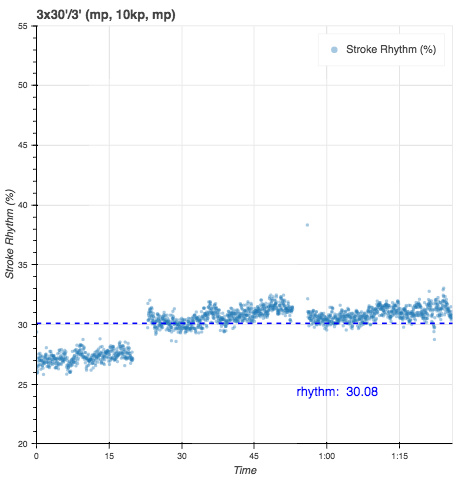
I looked a bunch of metrics.  Some of them are interesting (at least to me).

  • Drive length is consistent across time and stroke rates
  • peak force declined between the first 30 minutes and the last 30 minutes as I rated up to try to deal with the fatigue
  • Drive energy is basically work per stroke (of SPI).  This shows how I was a shadow of my former self in the last 30 minutes.
  • I thought the stroke rhythm was interesting.  My drive to recovery  ratio was smaller in the first 30 minutes and consistent between the 10KP and final MP segments.  Another indication of how my rowing changes when I am really tired.
  • Then a few plots versus stroke rate.  I find it interesting how different the first mp section is from the last mp section in these.

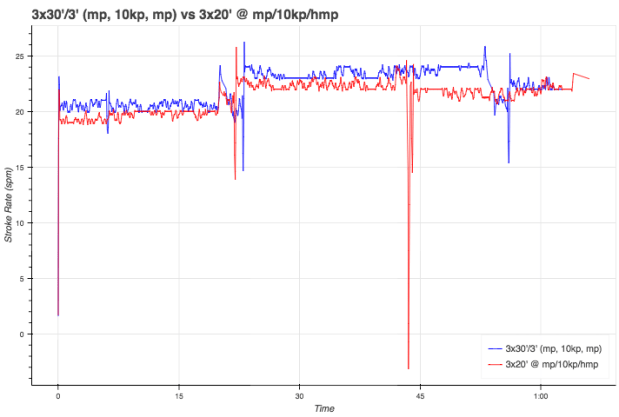
The fact that I had the hangup gave me an interesting opportunity to compare this workout to the 3 x 20′ version that I did 2 weeks ago.

Remember the first 10 minutes of today’s workout is missing.

The power was identical in the first and second intervals.  In the third interval of the prior workout, I felt so fresh, I upped the power.  Stroke rate was higher today, and I was trying to do that.  HR is interesting.  The first interval shows that my HR after 10 minutes today was much lower than 10 minutes into the first piece last time, but by the end of that piece it was a bit higher.  You can see the effect of that extra effort in the second interval.  My HR bumped up faster, and kept climbing.  Last week, it plateaued around 165 or so, today, it just kept on going.

Tomorrow:  2 x 30′ sub-MP, HR limit at 150


Monday: 4×15′ / 4′ rest (9′ @ 5KP, 6′ @ MP)

This one pushed me to my limit.  Two weeks ago, I did the version of this where I did 6′ at 5KP and 9′ at MP, and it was a pretty easy ride.  Swapping those two was brutal.

It’s a bit of a bummer, because I have rowed longer than this at a much faster pace then the 5KP, but it is what it is, and I can work with it.

The first rep was pretty manageable, but I definitely felt like I was working hard.  This step down format is a pretty fiendish way to do an interval.  I was struggling to get to the end of the 9 minute block, and my central governor really wanted me to stop at that point.  Instead, you slow down.  But you don’t slow down enough to feel much better.  My heart rate slowly drifted down and my RPE was amazingly high for a 2:03 pace.

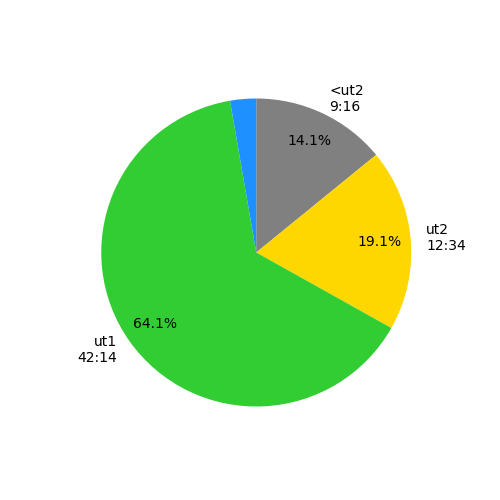
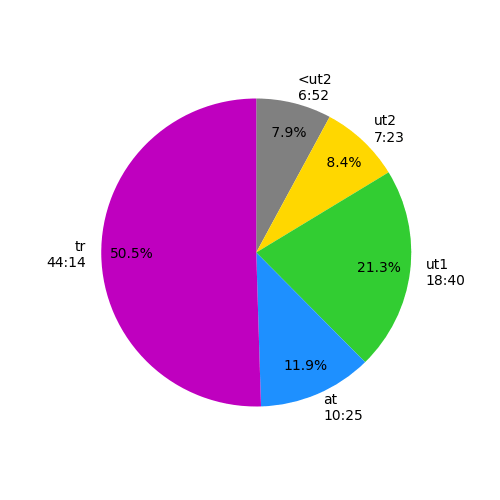
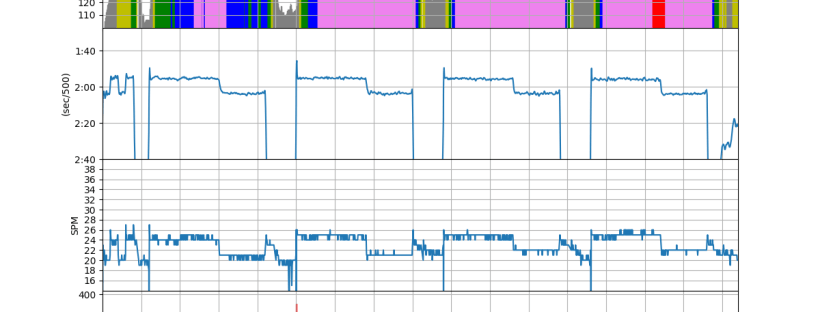
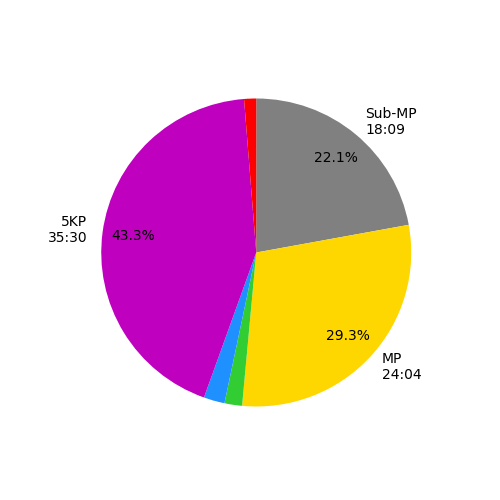
I reprogrammed my power zones in rowsandall to reflect my marathon target paces.

1-17j

1-30c

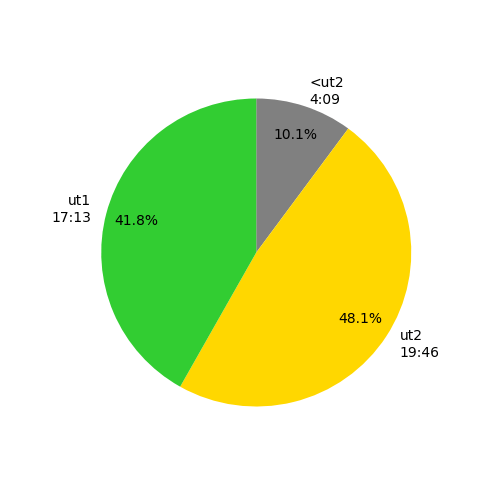
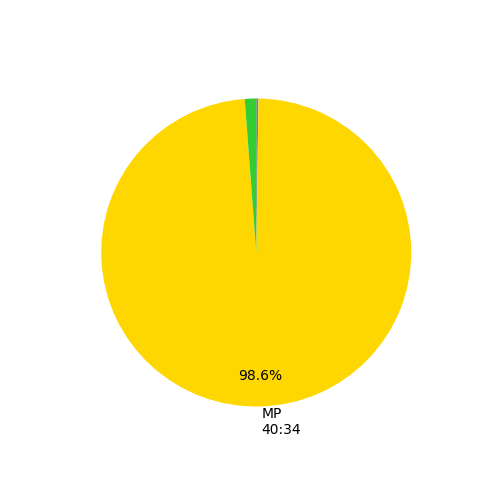
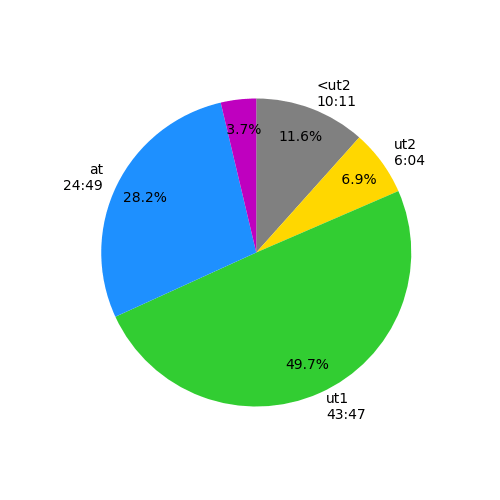
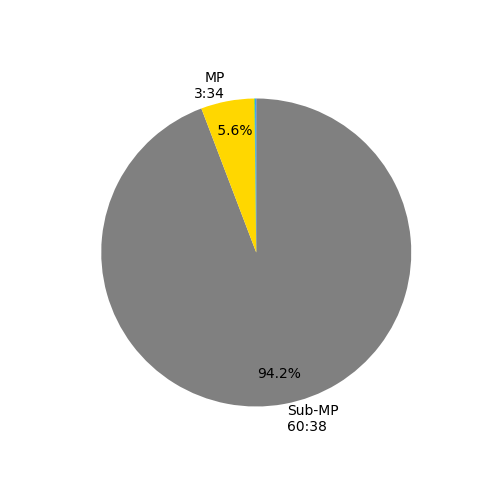
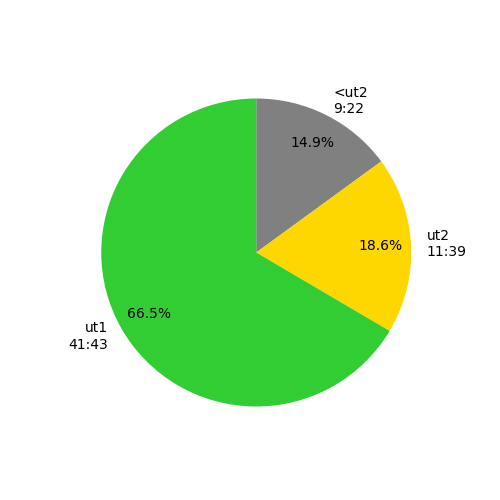
So for this workout, the goal was 36 minutes at 5KP and 24 minutes at MP.  The power pie chart shows exactly that break down.  So it will be a useful way to track this type of workout on the erg, and even when I am on the water.

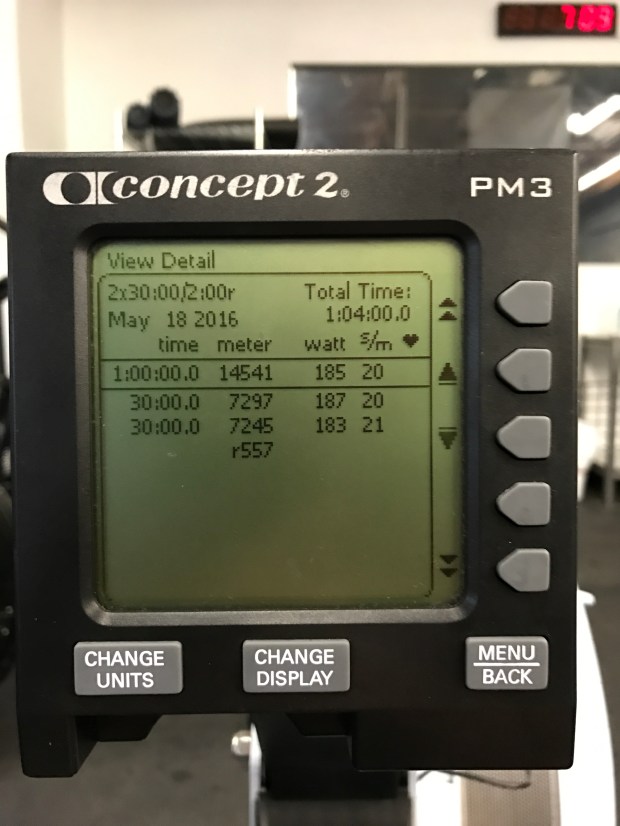
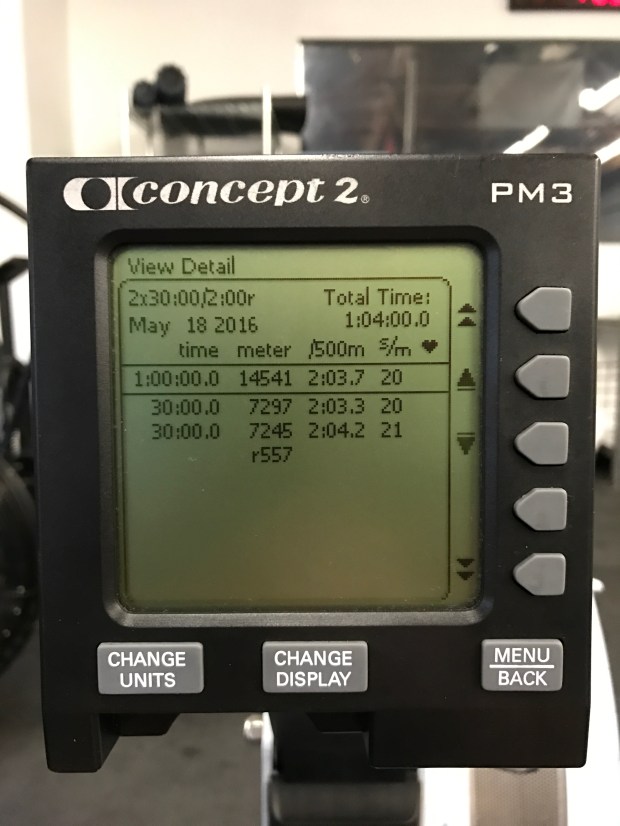
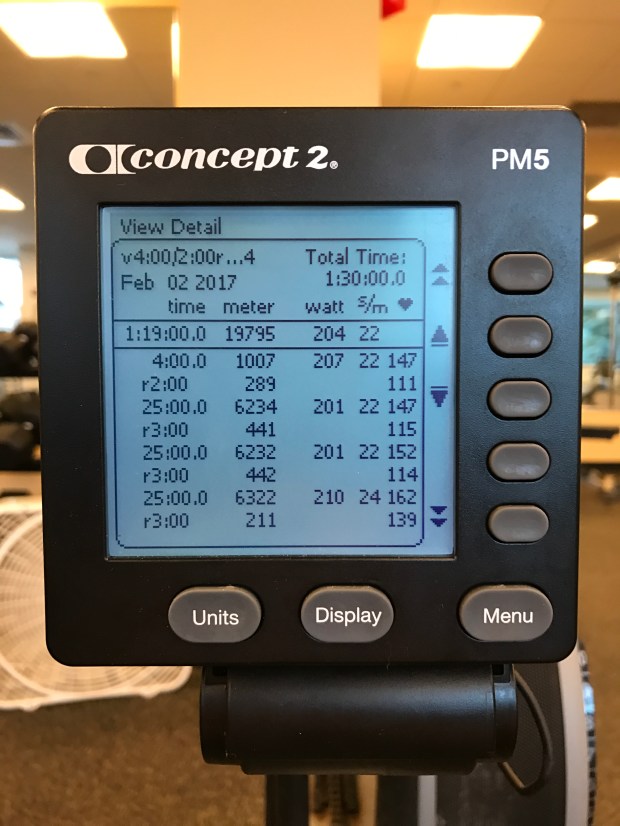
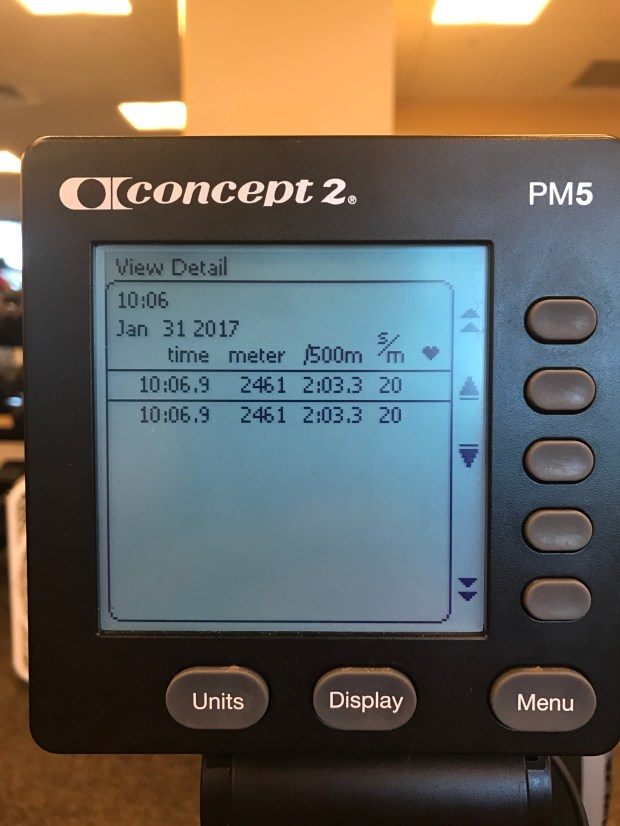
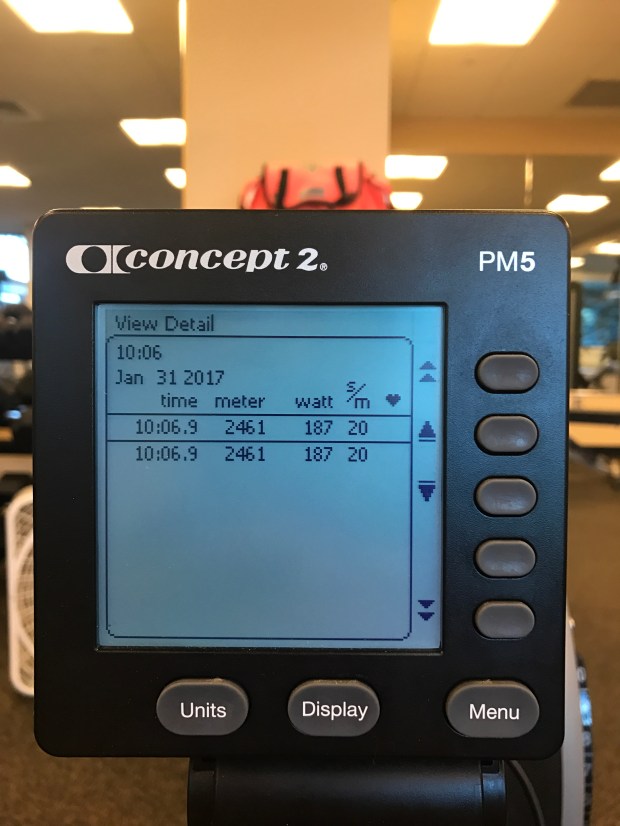
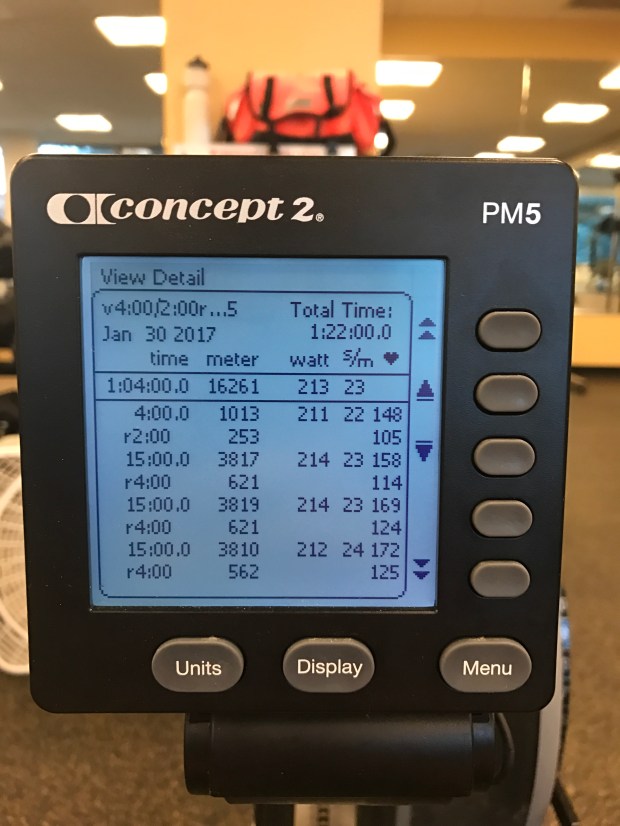
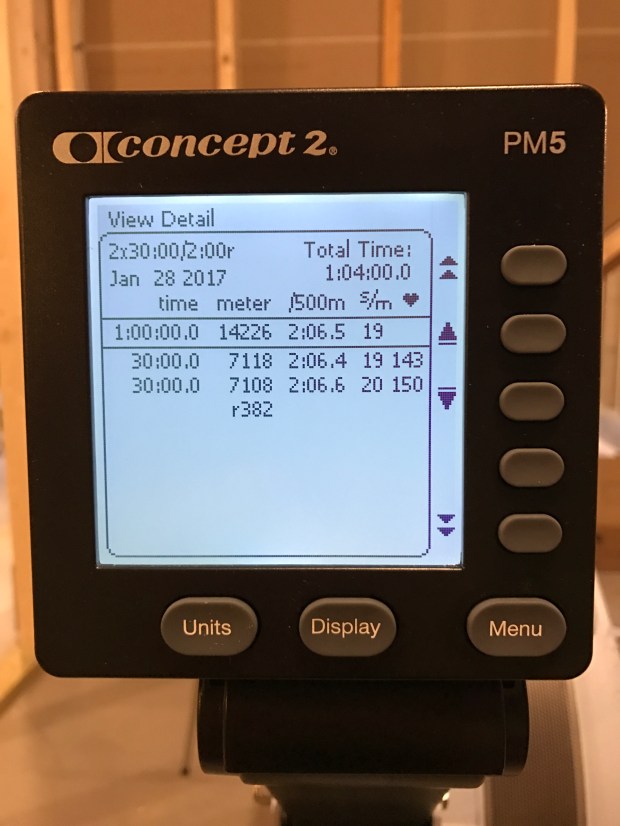
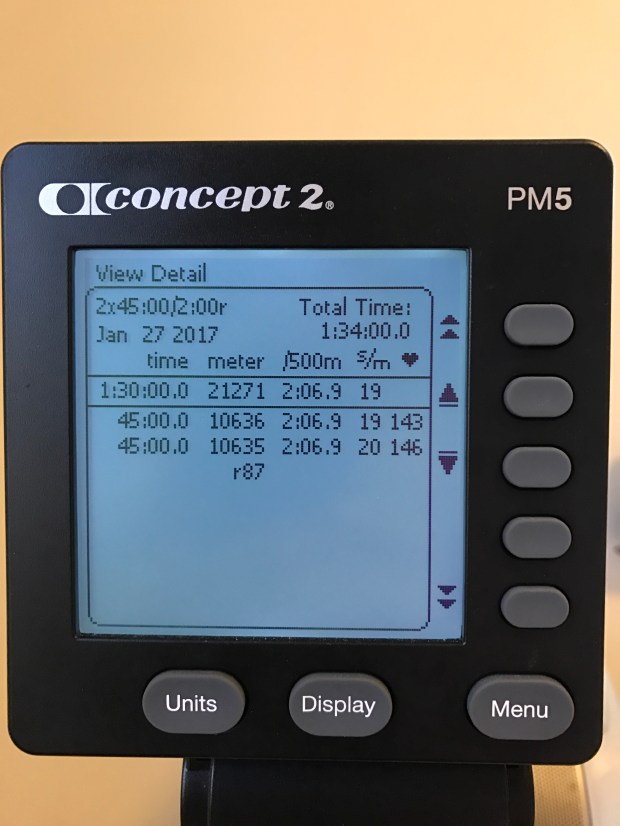
Pics of the PM.  I set it up as a variable interval session so I could grab the warmup along with the main set in one set of data.

Workout Summary - media/20170130-1315200o.csv
--|Total|-Total-|--Avg--|-Avg-|Avg-|-Avg-|-Max-|-Avg
--|Dist-|-Time--|-Pace--|-Pwr-|SPM-|-HR--|-HR--|-DPS
--|19032|82:01.0|02:09.3|187.5|23.0|159.5|179.0|10.1
W-|16257|64:00.0|01:58.1|213.6|23.3|165.0|179.0|11.0
R-|02782|18:01.0|03:14.4|064.8|21.5|134.5|179.0|08.8
Workout Details
#-|SDist|-Split-|-SPace-|-Pwr-|SPM-|AvgHR|MaxHR|DPS-
00|01018|04:00.0|01:57.9|212.8|22.2|132.4|148.0|11.4
01|02351|09:00.0|01:54.8|231.5|24.1|157.9|166.0|10.8
02|01464|06:00.0|02:02.9|188.7|20.8|160.5|166.0|11.7
03|02355|09:00.0|01:54.6|232.9|24.6|164.7|175.0|10.6
04|01464|06:00.0|02:03.0|188.3|21.1|170.2|175.0|11.6
05|02347|09:00.0|01:55.0|230.0|24.7|169.0|177.0|10.6
06|01462|06:00.0|02:03.1|187.7|21.9|173.7|178.0|11.1
07|02335|09:00.0|01:55.6|228.5|24.9|170.1|179.0|10.4
08|01460|06:00.0|02:03.3|187.1|22.0|174.5|179.0|11.1

I did a bunch of flex plots.  Drive length is good and consistent across rates and as I geot more tired.  It’s cool to see the effect of fatigue on stroke rhythm.  You can see my trading off higher rate to try to hold on to the power and the force I could generate declined.  The work per stroke versus stroke rate shows an increase with stroke rate.  I think that is mainly because the lower power stuff was tacked onto the end of the higher power stuff, so I was really spent and barely hanging on during those sections.  I usually see a flatter work per stroke than that.

Last week I did a version of this workout but with 6′ at 5KP and 9′ at MP.  I was interested to compare them.    The first plot is power and you can see that I was hitting the same target.  You can see that I was rating a touch higher, and I think that’s a good thing.  Finally in the HR comparison, you can see that I was struggling more with this workout more than the other one.  My HR was higher at 6′ in interval #1 today than it was last time.  I think accumulated fatigue and time of day are the main factors there.

Tomorrow:

3 x 30′ / 3′ Pace: MP, 10KP, MP HR cap: 90.0% (167)

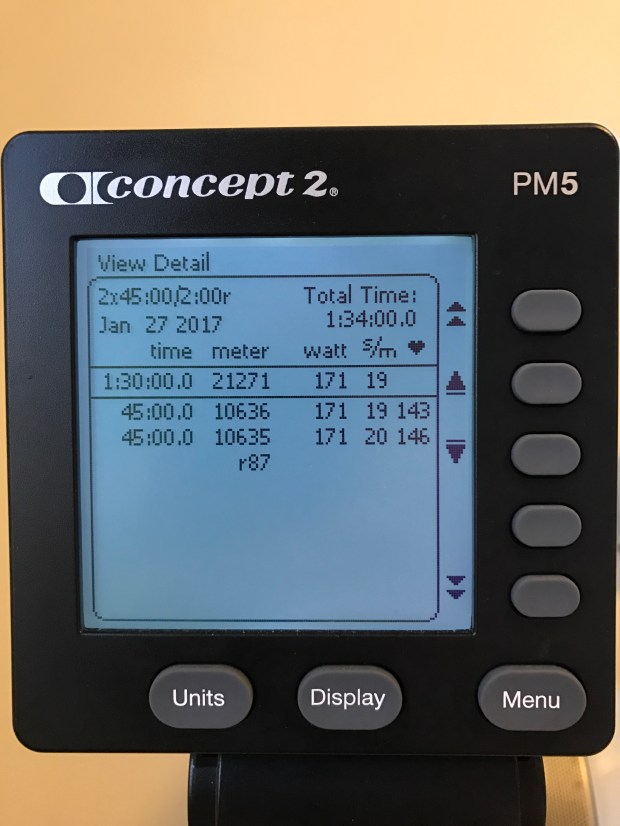
Friday: 2 x 45′ @ 170W

I need to get serious about rebuilding my aerobic base.  I’ve gotten into this hole many times before.  My training gets disrupted (in this case because of my knee injury and the then surgery), and when I return, I use the same pre-disruption power levels.  This ends up pushing my endurance workouts above their target zone.

The effect of this is that my ability to produce lactate increases and my ability to metabolize lactate decreases.  This is a very bad thing if I am planning to compete in a 3 to 4 hour race.  So, it’s time to reset my expectations and restart at a very low endurance training power.

I decided to try 170W, since my recent rows at 180W resulted in HRs way above my target.  I wasn’t sure how well I’d do because I was working on zero sleep (I just got home on  the red eye.)  It turned out to be a lovely row.

1-27a