Thursday: Steady State OTW

On the water, down in Newton in my single.

The featured image is an aerial view that I found of the old watch factory in Waltham.  The little bridge is just over 2km from the start of the rowable section of the river, and about 900m from the end at the Moody street dam.  Going down river, which is from the bottom of the picture to the top, you need to go through the span of the bridge right against the right hand shore, so you need to turn right at the corner of the straight wall to line up with the bridge.  Also notice that the bridge crosses the river at an angle so you need to turn aggressively in the other direction as soon as you have your line to the bridge.  It adds a bit of fun to workouts and keeps my head on a swivel!

Weather:  Cool and Breezy.  Wind was NNE between 5 and 10mph with gusts to 15mph.  This was a head wind going downriver and a tail wind coming up river.  It was forecast to be overcast, but it was actually mostly clear.  A lovely fall day, really.

Plan:

  • 4 lengths of the river
  • Short stops for a drink of water at the end of each chunk.
  • Rate: r20
  • Pace: better than 2:30
  • HR Cap: 155
  • Technique: Work on balance, try to get blades off the water on recovery.  Work on getting a good reach at the catch and staying forward through the initial drive.

Screen Shot 2016-09-29 at 1.09.44 PM.png

Today I decided that I would be careful enough and get data to recalibrate my speedcoach.  Instead of using the built in routine, I decided to just match start times and durations of the four moving segments between speedcoach and RIM, and then use the formula helpfully provided in the speedcoach manual.

Here is the Speedcoach data….

Start_|_Dist_|_Split_|_Pace_|_Strks__|_Rate_|_DPS_|_AvgHR_|_Remarks
00009_|_1094_|_06:15_|_2:51.5_|_117___|_18.7_|_09.4_|_121___|_warmup
01103_|_2779_|_14:32_|_2:36.8_|_294___|_20.2_|_09.5_|_148___|_m
03882_|_0099_|_00:38_|_3:09.9_|_011___|_17.6_|_09.0_|_136___|_r
03981_|_2643_|_13:24_|_2:32.0_|_272___|_20.3_|_09.7_|_150___|_m
06624_|_0134_|_00:58_|_3:36.4_|_013___|_13.4_|_10.3_|_133___|_r
06758_|_2727_|_14:37_|_2:40.7_|_296___|_20.3_|_09.2_|_151___|_m
09485_|_0086_|_00:36_|_3:29.3_|_008___|_13.3_|_10.8_|_123___|_r
09571_|_2672_|_13:35_|_2:32.6_|_274___|_20.2_|_09.8_|_150___|_m
12243_|_1097_|_06:10_|_2:48.4_|_125___|_20.3_|_08.8_|_141___|_c

Dist__|_Time__|_Pace___|_Strks_|_SPM__|_DPS__|_AvgHR_|_Remarks
01094_|_06:15_|_2:51.5_|_117___|_18.7_|_09.4_|_121___|_warmup
10821_|_56:07_|_2:35.6_|_1136___|_20.2_|_09.5_|_150___|_Main set
00319_|_02:12_|_3:26.3_|_032___|_14.6_|_10.0_|_131___|_rest meters
01097_|_06:10_|_2:48.4_|_125___|_20.3_|_08.8_|_141___|_cool down
13331_|_10:44_|_2:39.2_|_1410___|_19.9_|_09.5_|_146___|_Total

The important bit is the time and distance for the main set

10821m in 56:07 sec.

Here is the RIM data

| Tstart_ | Dist_ | Time_ | _Pace_ | SPM_ | avgHR | _DPS___ | Remarks
| 00:00.0 | 01243 | 08:14 | 3:18.7 | 15.6 | 113.6 | 09.7 | warming up
| 07:44.0 | 02884 | 14:35 | 2:31.7 | 20.3 | 147.8 | 09.7 |
| 22:19.0 | 00167 | 01:20 | 3:59.5 | 20.3 | 138.5 | 06.2 |
| 23:39.0 | 02737 | 13:20 | 2:26.1 | 20.4 | 150.5 | 10.1 |
| 36:59.0 | 00150 | 02:02 | 6:46.7 | 18.6 | 132.9 | 04.0 |
| 39:01.0 | 02808 | 14:35 | 2:35.8 | 20.3 | 150.9 | 09.5 |
| 53:36.0 | 00140 | 01:48 | 6:25.7 | 19.4 | 137.1 | 04.0 |
| 55:24.0 | 02797 | 13:36 | 2:25.9 | 20.3 | 149.6 | 10.1 |
| 09:00.0 | 01198 | 06:34 | 2:44.4 | 21.3 | 142.4 | 08.6 |

| Tstart_ | Dist_ | Time_ | _Pace_ | SPM_ | avgHR | _DPS___ | Remarks
| 00:00.0 | 01243 | 08:14 | 3:18.7 | 15.6 | 113.6 | 09.7 | warmup
| 00:00.0 | 11226 | 56:06 | 2:29.9 | 20.3 | 149.7 | 09.8 | Mainset
| 00:00.0 | 00457 | 05:10 | 5:39.2 | 19.3 | 135.8 | 04.6 | rests
| 00:00.0 | 01198 | 06:34 | 2:44.4 | 21.3 | 142.4 | 08.6 | cool down

From RIM, 11226 in 56:07

The formula is

new cal factor = (old cal factor * true distance) / displayed distance

(0.962 * 11226) / 10821 = 0.998 (my new cal factor)

Look at that, I’ve gained 5 seconds of boat speed without working any harder!

Other than this, the workout was entirely unremarkable.  My hands are a mess.  I have blisters on my index fingers, and a bad one under the callous at the base of my ring finger.  Today didn’t make them any worse, but my hands hurt a bit during the row.  I must be gripping differently in the double and causing some trouble.

The wind was enough to be noticeable, but there wasn’t any chop (I love this river!)  So, I set the pace by using the HR limit.  If I got up to the limit, I would back off the pressure a bit to bring it back in line.

Tomorrow:  Back to Quinsig.  Another attempt at the grand hook workout.  6km with a big turn starting at about the 5km mark.  Great practice for head racing!
screen-shot-2016-09-21-at-1-53-57-pm


Side View Video – R24, r26, r28

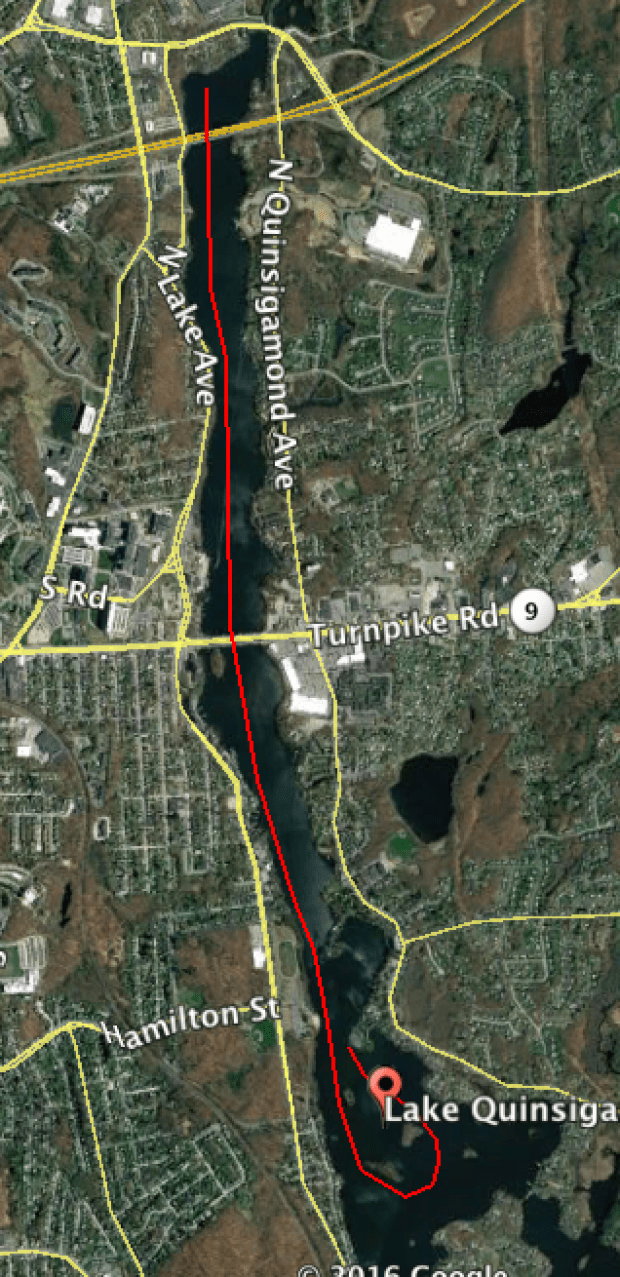
Yesterday, I did a hard 5k on Lake Quinsigamond.  I mounted a gpro camera on a backstay attached the end of to my starboard rigger, just forward of the oarlock.

In the 5K piece, I did the first 2K at r24, the second 2k at r26, and the final 1200 meters at r28.

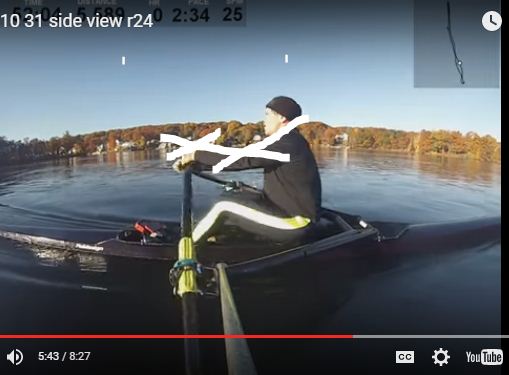
r24 on fresh legs.

Looking at the video, I am having trouble finding a lot to criticize.  The things that I notice are:

  • More blade clearance off the water
  • Extract blades a bit more square before feathering
  • Try to bury the blades a bit sooner.  Some strokes, I am missing a little water at the catch.
  • Sit up a bit taller

The other thing I am wondering is if it would be a good idea to lower my shoes a little bit, I might be able to get a little more reach.

Last thing that I noticed was how absolutely beautiful it was yesterday morning.  Isn’t it a pretty lake!

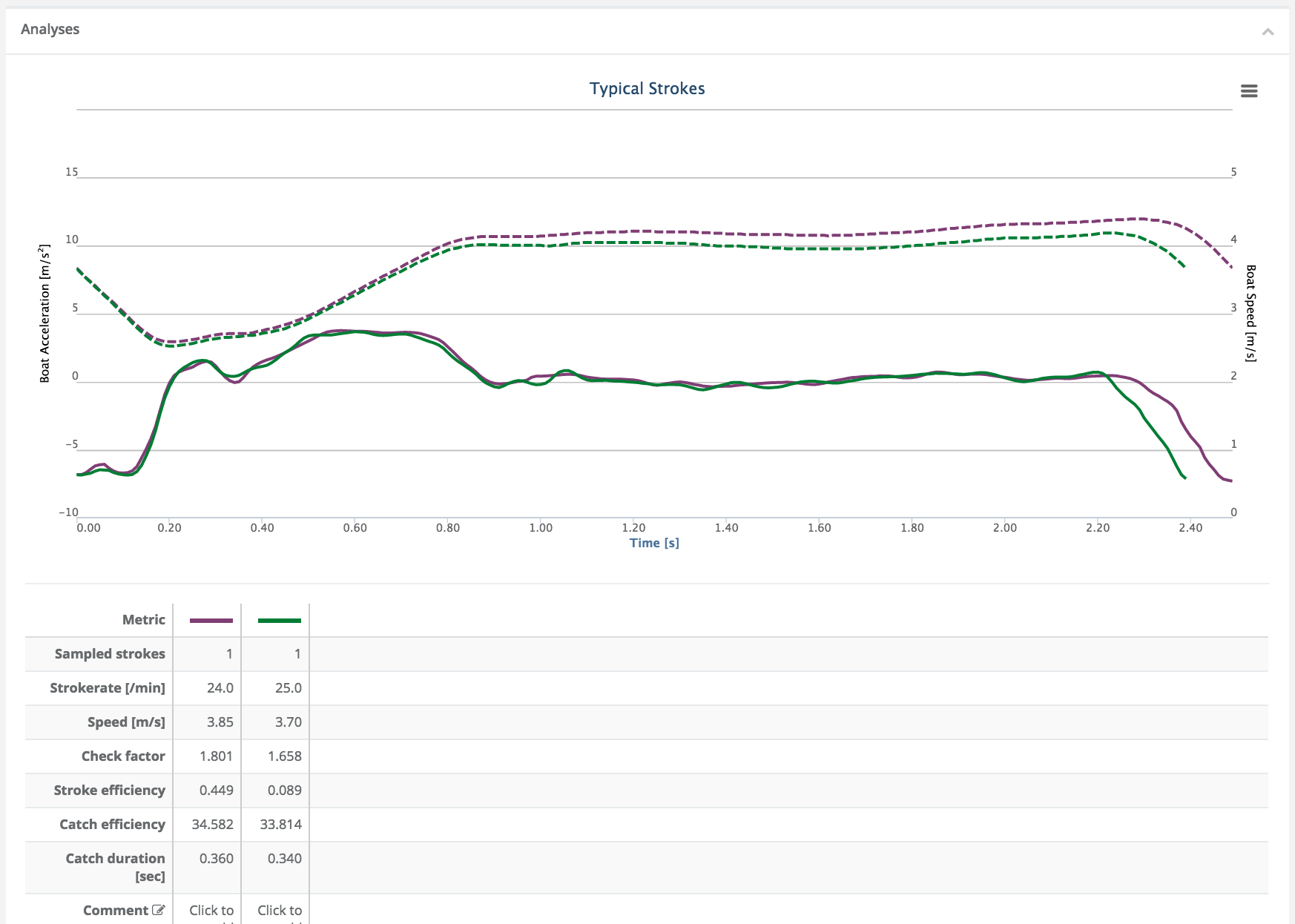
And here is the boat acceleration from RIM.

Screen Shot 2015-11-01 at 9.49.29 AM

Comparing this to “world class” curves, the obvious difference is in the height of the positive acceleration peak.  There is also a bit of trash at the finish.  The catch seems to have a little double hump thing going on, which I have to assume is me bouncing a bit at the forestop.

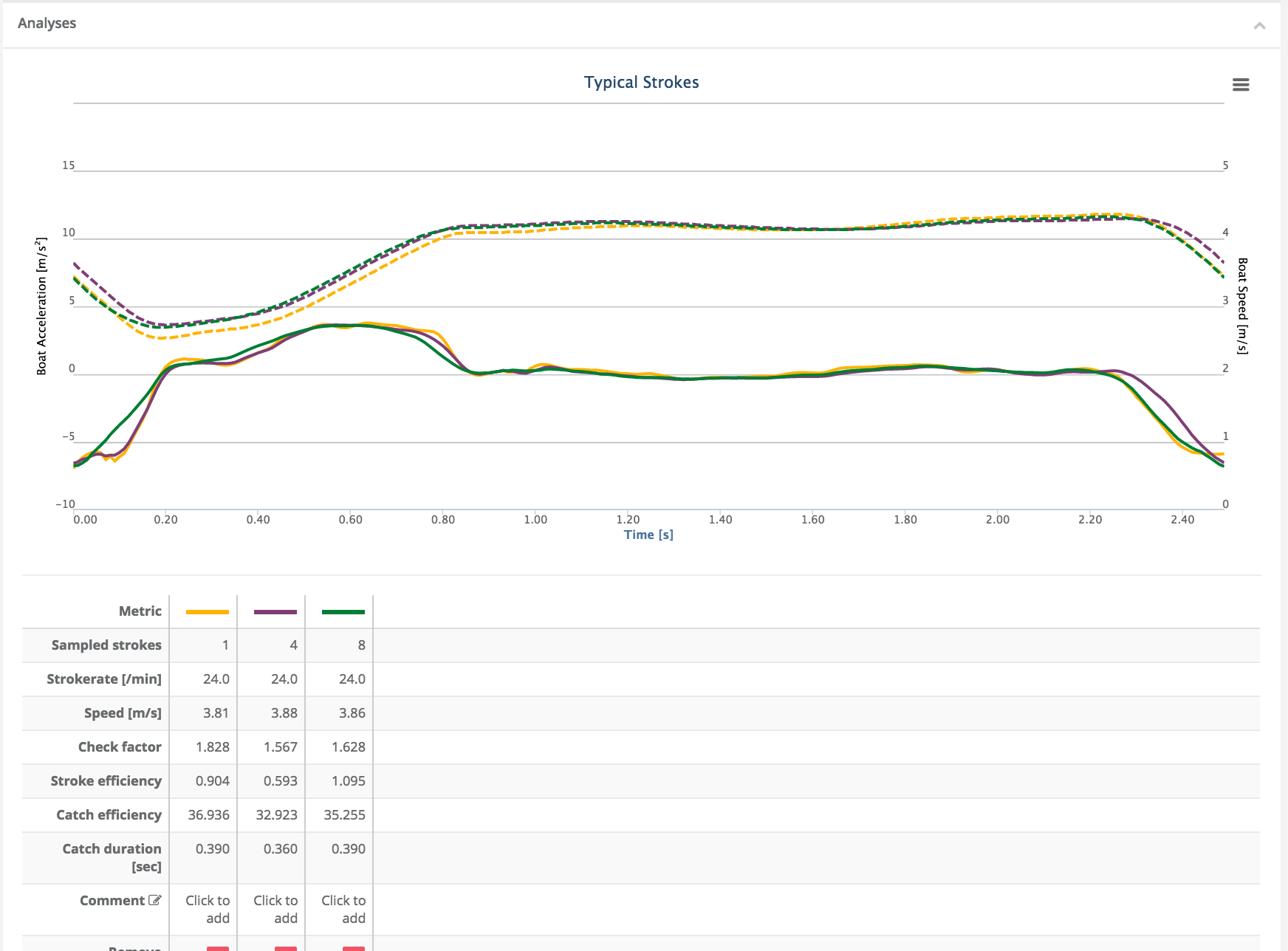
Just to follow up on the discussion from Sander’s blog post.  I decided to look at the same set of strokes, but over a single stroke, 4 strokes, and 8 strokes to see how the curves and numbers change.

Screen Shot 2015-11-01 at 9.52.23 AM

There is a remarkable change in the curve from 4 strokes to 8 strokes, and the numbers change too.  I think that if you are using RIM to provide feedback, that you might do best to either stick to single strokes, or at least make sure that you are always looking at the same number of strokes averaged.

r26 – This was after 2K of hard rowing, so I am feeling a bit more fatigued.

On this one, the primary flaw that I see is that my blades are getting shallower as the drive moves from catch to finish.  By the time I extract the blades, about the top 1/3 of the blade is above the surface of the water.  I need to work on keeping my hands level through the drive and finish a bit higher on my torso.   The other thing that could be causing this is allowing myself to lay back too much at the end of the stroke.  I would probably be faster if I finish a bit earlier with less layback.

Here are the RIM curves for r26Screen Shot 2015-11-01 at 10.09.29 AM

The negative acceleration at the catch is larger, which probably means that I am now rushing the slide a bit.  You can see a little positive acceleration on the last third of the recovery.  Some strokes show a pronounced double hump, some do not.  There is still a bit of noise at the finish.

r28

This video is the last 4 minutes of r26 and then about 5 minutes at r28.  From 1:30 to about 2:00 into the video, I am going underneath the brand new bridge across our lake.  Isn’t it beautiful?  Now we have two broad arches, on for up lake traffic and one for down lake traffic.

The r28 stuff starts at about 4:30 into the video.

The stroke mechanics, unsurpisingly look a lot like r26 mechanics.  Same basic strengths and weaknesses.

Here is one r28 stroke and one r30 stroke.  Basically the same shape.  A bit less of the double hump on the r30 stroke.  One change this year is that I have a smaller positive acceleration during the recovery, which I think is basically a good thing since it means that my speed on the slide is more constant and I am not rushing into the catch.  But I am not expert enough to be sure.

Screen Shot 2015-11-01 at 10.22.37 AM

Later today, I will post some video of the drills that I did yesterday.  Someone may find them useful, or if nothing else, you can smirk about how bad they look.

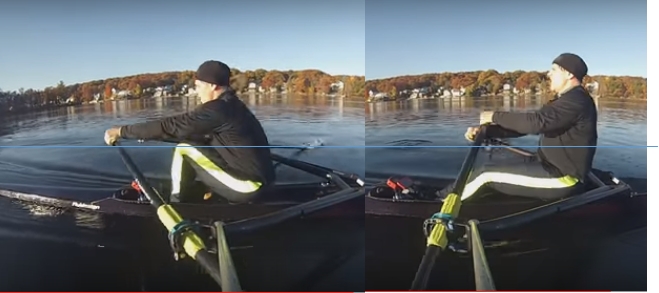
I am very fortunate to have had Sander give me some feedback by marking up my video.  He was illustrating two flaws in my rowing.  The first is not having relaxed and straight arms at the catch.

greg1

The other flaw was not maintaining constant handle height through the drive.

greg2

Thanks Sander!

Acceleration Curves at 24 to 40 spm

I had RIM running in the boat today (as usual) and since I haven’t rowed at these high rates before, I decided to take a look at the stroke accelerations and see what flaws I could see.  Turns out they are readily apparent.

First, for comparison, here are some nice steady state strokes at 23 and 24 spm.

Screen Shot 2015-06-15 at 1.02.29 PM

See that nice smooth drive at 23 SPM (purple).  Then as the rate goes up to 24, you can start to see the appearance of the double hump in the drive.  That’s is me opening my back early.

Next, here are 3 sets of strokes when I was trying to hit targets of 26, 28 and 30.  They actual rates were a bit higher.  I guess I was over eager.

Screen Shot 2015-06-15 at 12.54.19 PM

The double hump continues to be more pronounced and you can begin to see two other flaws.  First is a disturbance at the finish (around 0.8sec).  That is me starting to get sloppy as I try to get back up the slide more quickly.  The other is a gradual rise in acceleration during the recovery (starts at 1.2sec at r30).  But still, not horrible.

Now we look at r34 and r36.  These are a bit harder on the eyes.

Screen Shot 2015-06-15 at 12.56.34 PM

The double hump is now significantly more offensive, there is a pronounced blip at the finish and I am clearly accelerating as I move up the slide versus maintaining a steady speed from the handles all the way through the legs on recovery.  The miracle here is that I actually rowed at these rates at all.

Lastly the ugliest of the bunch.  Here are three blocks of strokes at 38 to 40 spm.

Screen Shot 2015-06-15 at 12.55.28 PM

Same flaws as before, only more pronounced.  It appears that going from 38 to 40spm does not enable me to make the boat go any faster.  In fact, now the double dip is so pronounced that acceleration goes almost all the way down to zero in the middle of the drive.

So, what to work on.  I need to work on not opening my back.  I think the prescription is a set of 20 stroke intervals between 30 and 36 spm with enough paddle time so that I am working on technique instead of fitness.  This will get into the program next week after the race.