Sunday: Windy 12km on Lake Quinsigamond in a 2x

I met Joe at 8.  We were expecting 5 total rowers, but everyone besides Joe and I cancelled out.  So, we hopped in the double.

I was glad to get out on the water for a bunch of reasons.

  1. It sure beats erging, and I’ll be doing a lot of that over the next 5 months.
  2. There are all sorts of changes afoot with the rowing club and I wanted to hear the details
  3. I had a new version of the Quiske app that I wanted to try out.

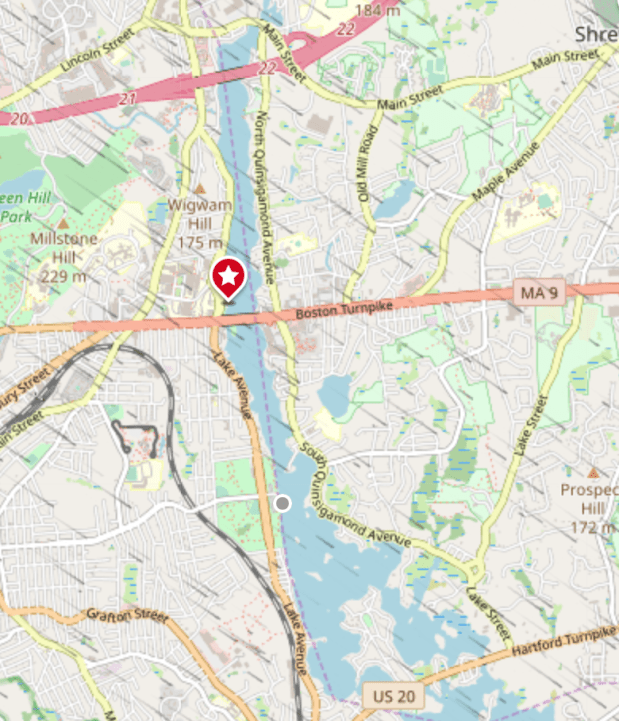
The weather was a little iffy.  It was in the low 40s, but there was a brisk wind blowing from the NW.  It was about 10mph on average, but quite gusty, up to 20mph.
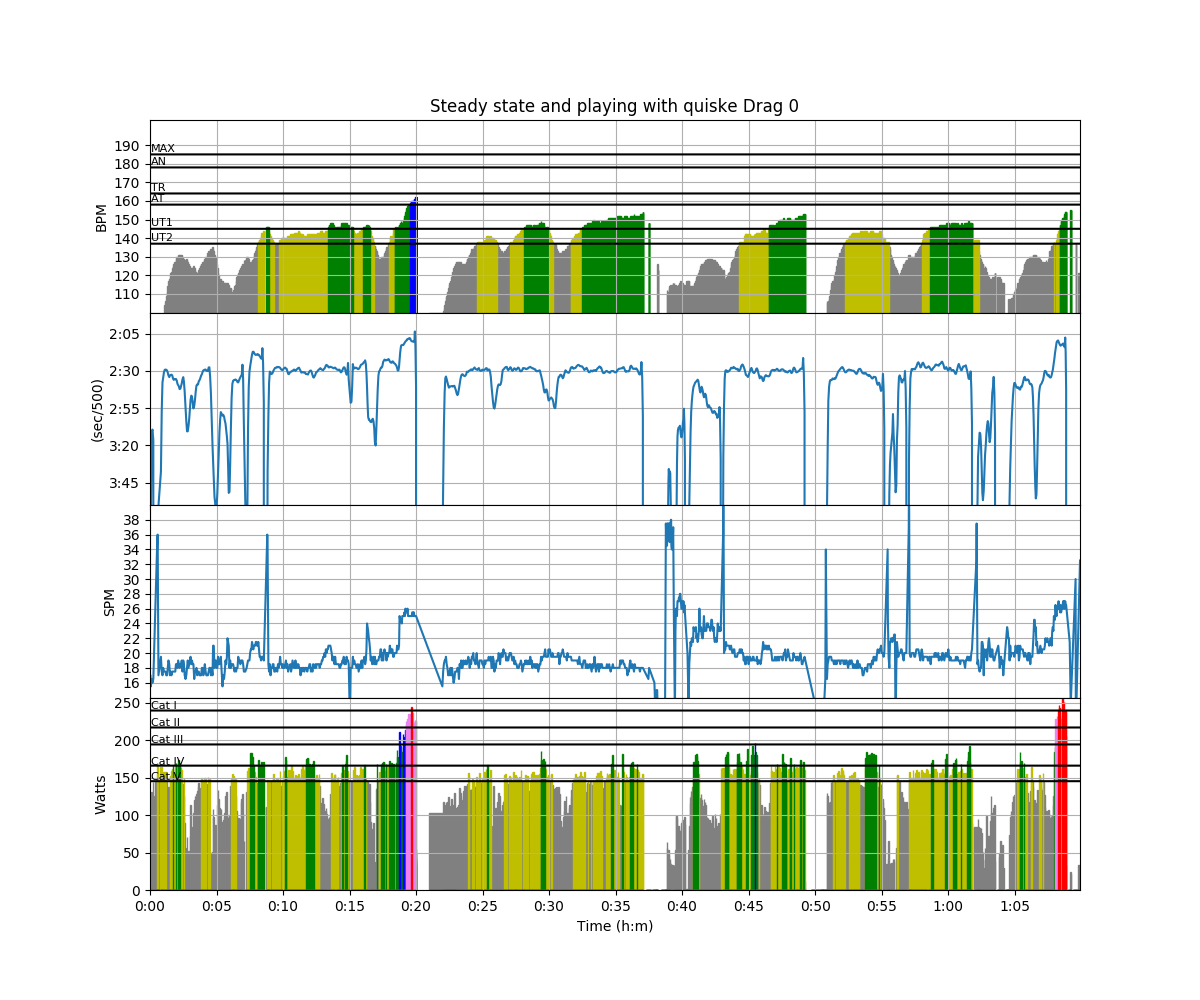
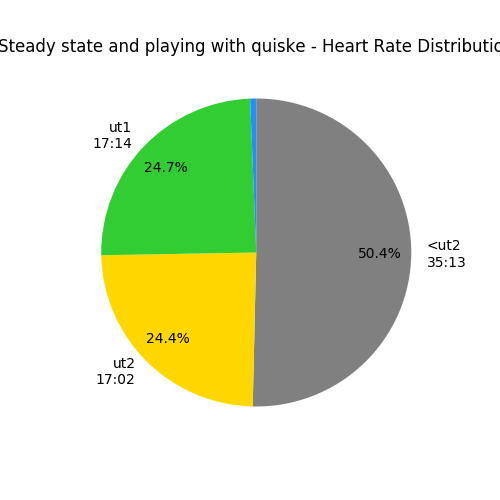
Screen Shot 2018-11-04 at 1.36.35 PM

When the wind is from the NW, the worcester side of the lake is quite pleasant.  You are in the wind shadow from the shore and you get flat water and gentle tail wind.  But the trip north up the shrewsbury shore is a real slog.  The wind hits the shoreline and is funneled to the south.  There is a pretty good chop and each headland acts as a funnel for the wind and the waves.

Look at those horribly slow splits!  We were hovering around 3:00 splits for most of the way up the lake.  Each of the big dips was around one of those headlands.

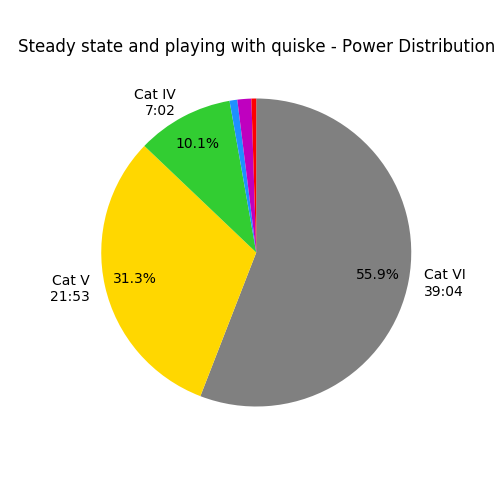
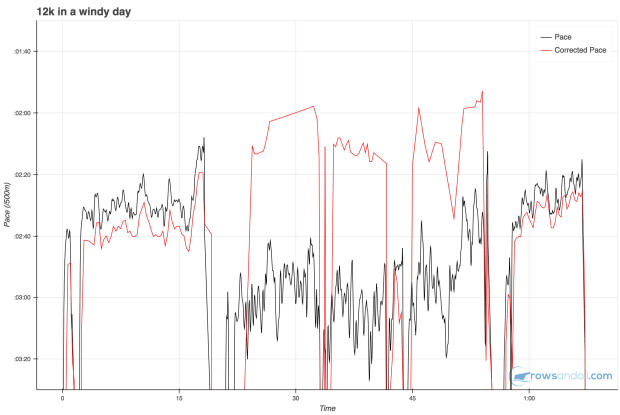
Because I was in the double, I didn’t have my oarlock, but I was curious how much power was required to push into the headwind, so I used one of the advanced features on rowsandall.  There is a physics model to estimate power from pace for a few boat types, including the 2x.  The model includes the ability to correct for wind.  It’s very cool.  It imports the minute by minute wind data from the nearest weather station, and then applies it to the GPS data from your row and figures out whether it was a head wind, cross wind or tail wind and then calculates a corrected pace.  I think today’s breeze might have overwhelmed it.  It says in the toughest bits, we were hitting 300W.

This in turn is used to calculate the corrected pace chart.
bokeh_plot (53).png

I think it might have been a bit generous on the pace estimate, but I sure felt better about the our slow slog into the wind after I looked at it.

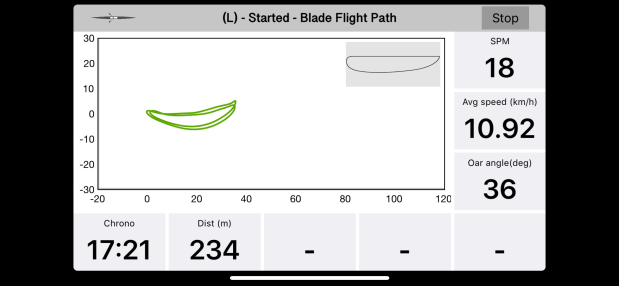
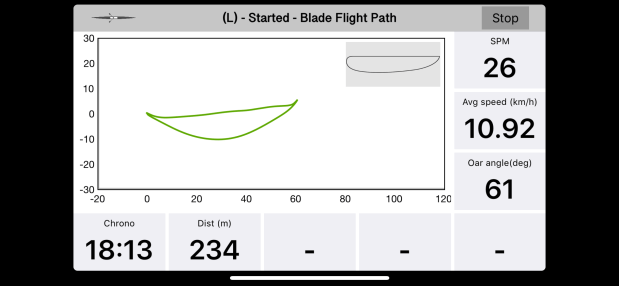
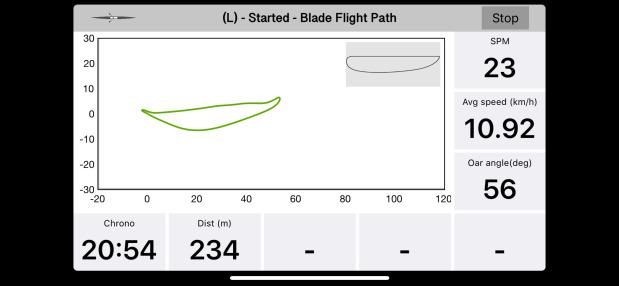
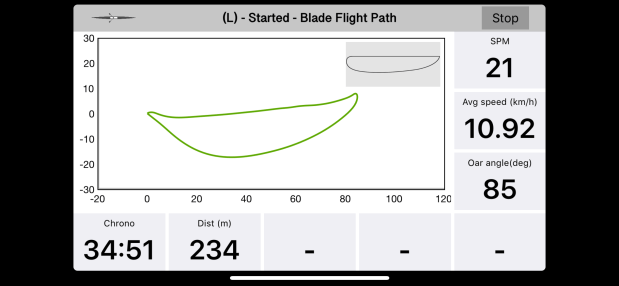
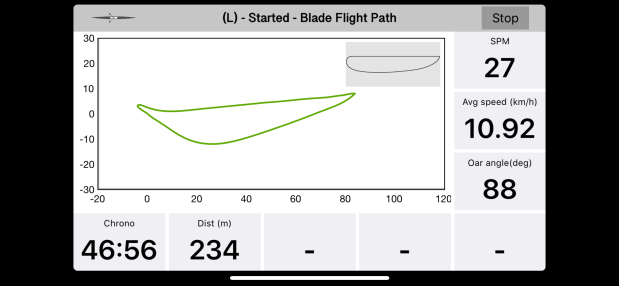
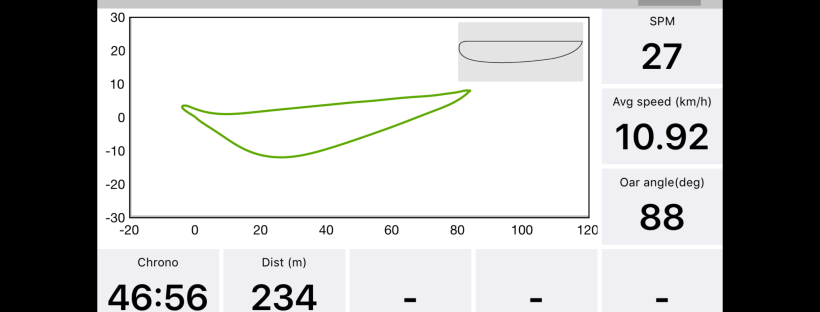
The Quiske pod worked great.  When I started I had it mounted wrong way around so it must have thought I was rowing in the Upside Down (little Stranger Things reference for you there).  Once we got to the south end of the lake, I fixed it and was able to see my oar path for about 4K up the lake before my phone ran out of juice.

It’s remarkable how quickly the Quiske folks are improving the iOS app.  It’s already at a state where it can be used to help diagnose and work on elements of technique and they are rapidly working out all the kinks.  I’ll be writing up a more detailed review sometime in the next few weeks.

Tomorrow:  I think it will be basically be a rest day.


Wednesday: Quiske!

For the past year or so, there has been a product on the market from a Finnish startup called Quiske.  They have a little pod that can be attached to your oar, or your seat.  On a boat or on an erg.  And this pod is MAGIC.  It works with an app on the phone to provide a stroke by stroke graph of interesting things like your oar path or your seat velocity.

I am interested in this product because I rarely if ever am able to get real time coaching.  I will record video and send it off to Marlene Royle who will give me feedback and recommend drills and suggest changes, but it is very hard to keep these changes in mind when I practice.  Here are a couple of examples.

  1.  I tend to break my knees too early on the recovery.  With the sensor on the seat, I would be able to see the seat velocity occurring too soon and could work to correct it.
  2. I have developed the habit of digging too deep at the catch.  Obviously, it’s pretty hard to look at your oar blades, but with the magic pod, I can see the exact path that my oars are taking through the water, and I can see in all its glory how my stroke includes both digging too deep AND washing out towards the release.

So, I had big hopes for this new toy and I was eager to give it a try.  So the session on Wednesday was more of a fartlek than anything else.

Setup was a snap.  I put the included strap around the oar collar, inboard of the oarlock, and then launched the app, it found the pod and I connected up.  Then I rowed out to the good part of the river.  I was blown away and delighted by seeing the oar path diagrams like I had seen in Kleshnev’s book popping up on my iphone screen.

         Workout Summary - media/20181018-1250330o.csv
--|Total|-Total-|--Avg--|-Avg-|Avg-|-Avg-|-Max-|-Avg
--|Dist-|-Time--|-Pace--|-Pwr-|SPM-|-HR--|-HR--|-DPS
--|12427|69:54.0|02:48.8|126.5|19.7|133.6|162.0|09.0
W-|08058|39:21.0|02:26.5|152.4|19.3|141.8|162.0|10.6
R-|04379|30:33.0|03:29.3|093.2|20.3|123.1|162.0|03.3
Workout Details
#-|SDist|-Split-|-SPace-|-Pwr-|SPM-|AvgHR|MaxHR|DPS-
01|00166|00:47.4|02:22.5|146.6|17.6|113.4|125.0|12.0
02|00146|00:41.0|02:20.5|142.8|17.5|129.4|133.0|12.2
03|00243|01:04.7|02:13.2|161.1|20.4|134.4|143.0|11.0
04|01539|07:19.3|02:22.7|146.2|18.4|143.2|148.0|11.4
05|00633|02:46.9|02:11.9|186.1|22.3|145.5|162.0|10.2
06|00431|02:14.0|02:35.5|139.0|18.8|134.5|141.0|10.2
07|00592|03:02.0|02:33.7|145.0|18.8|142.3|149.0|10.4
08|01234|06:16.2|02:32.4|142.1|18.5|146.7|153.0|10.6
09|01258|05:53.9|02:20.6|154.6|19.7|142.7|153.0|10.8
10|00582|03:02.0|02:36.3|154.0|18.5|139.8|144.0|10.4
11|00887|04:32.0|02:33.3|156.9|19.4|143.9|149.0|10.1
12|00348|01:42.4|02:27.3|171.1|24.0|138.5|154.0|08.5

Now for the Quiske stuff.

First, this is what my normal steady state rowing looks like.

2018-10-17 06.58.50

This is apparently what it should look like.

Screen Shot 2018-10-18 at 2.03.29 PM.png

Here is my first screen cap of rowing at head race pace and pressure.

2018-10-17 07.10.15

Then I started to work on changing my stroke.  The first thing I tried was to consciously keep my oars in deeper through the last part of the stroke.

2018-10-17 07.27.19

The I was just having fun.  Here are Arm only, then arms and body, then half slide.

Next I tried to row as deep as I possibly could.  I really pulled the handles up high and buried the shafts.  It looked like this.  Now I know what to avoid.

2018-10-17 07.47.06

I was curious about the recovery being slanted in all the plots. so I tried rowing with just my port oar and kept my starboard oar flat on the water.  It wasn’t as flat as I would have expected.  I am not sure if that’s a alignment issue in the pod, or if the water is at an angle where I row.

2018-10-17 07.54.29

Finally, I tried some head race strokes again, right at the end.

2018-10-17 07.59.11

Not much different from the first ones.  Maybe even deeper at the catch.  I guess this will be a long project.