A few sprints on a treadmill

Still in Munich. Fitness center is still hot as hell. 

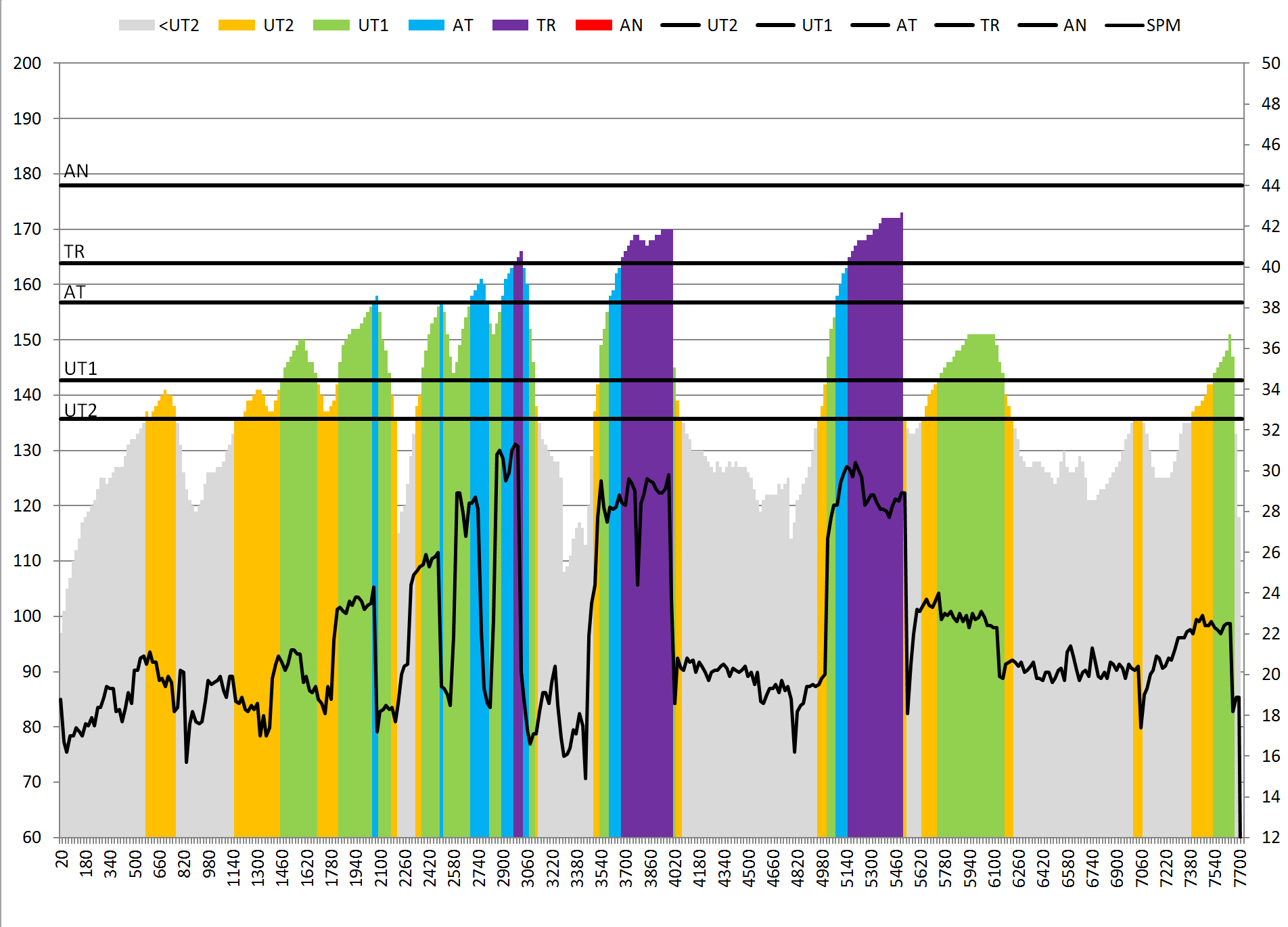
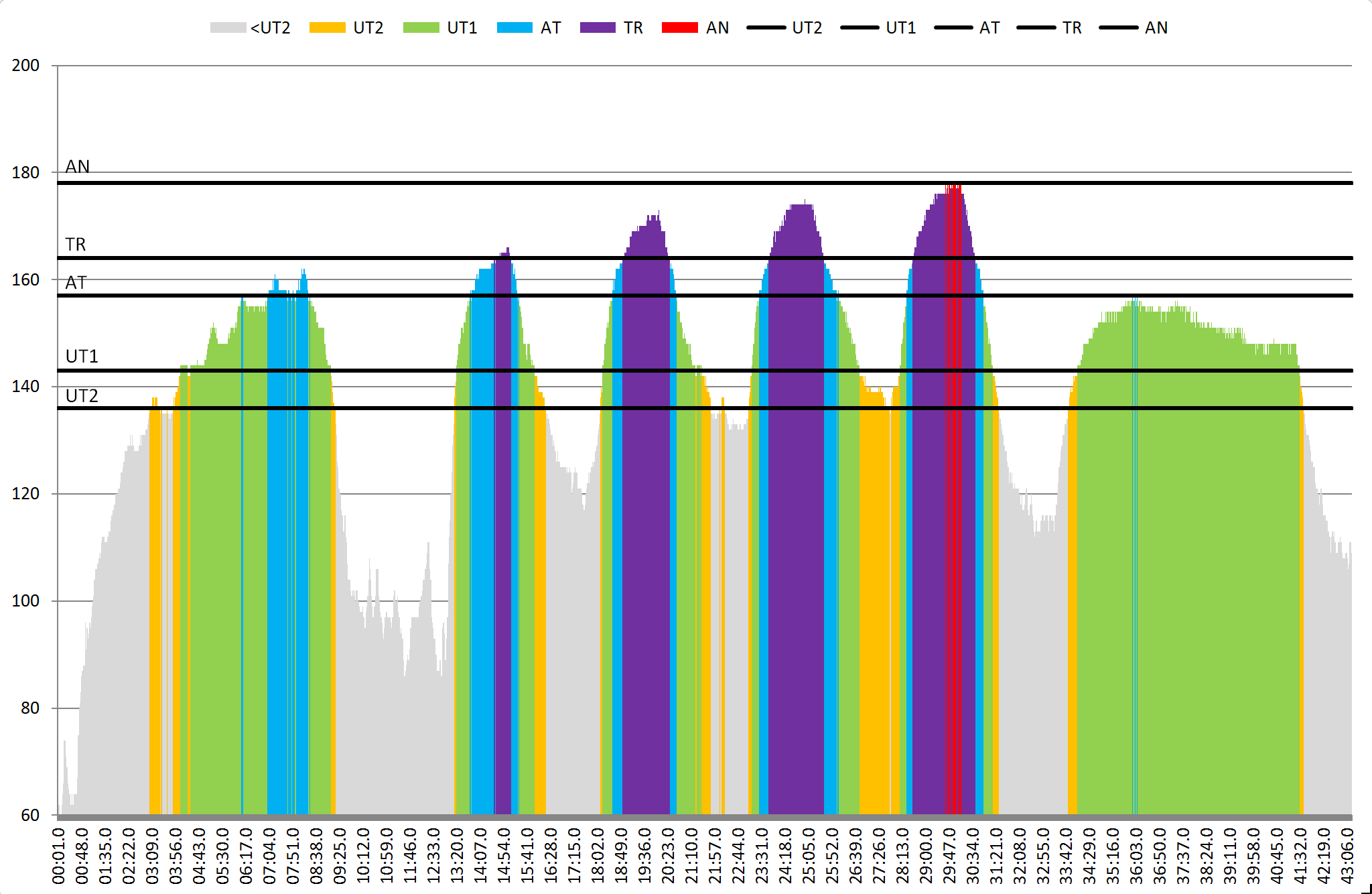
Today, I had two objectives. Another hour or so of endurance training, plus a few 1′ intervals. I am not really tapering for the race this weekend, but I felt like doing a few intense sprints would be beneficial to keep some intensity. 

I started at a fast walk and a 10% grade for 5′, then I went to a jog for another 5 minutes, and continued to add speed at 15′. At 20′, I slowed down to a walk for a minute, and then cranked to incline to max (15%) and sped up to 6 mph for a “hill sprint”. I did a minute, which was enough to push my HR above 170. Then I did 4 minutes of active rest at 2mph and 15% incline. Then another minute at 6mph. Then 4 more minutes of rest, then a final minute. I felt like puking after that, so I guess I was doing them right. I finished on the treadmill with a 5′ cool down. 

Then I hopped on the recumbent stationary bike and did an easy 30′ with a HR cap of 150 (75% HRR). 

Tomorrow: basically the same thing, but only two sprints. Then I fly home, arriving at 7pm. Then I race Saturday afternoon.

Another taper plan – From Rowing Faster (Ed McNeely)

Based on the a comment from Tom (Stelph), I went and looked at Chapter 19 of the second edition of Rowing Faster.  This chapter is written by Ed McNeely and in principle is quite similar to the taper I wrote up from the Shepley Paper.

Basically, the idea is to maintain the intensity of the training, but reduce the volume.  In the Shepley paper, the protocol was to warmup, do a small number of ~75sec intervals then cool down.

The chapter defines 3 types of what it calls “minor tapers”.  I doubt anyone who isn’t competing at a collegiate or elite level would consider the moderate or major tapers, unless perhaps you are planning to race against blood thirsty cannibals in a set number of months and your life depends on the extra second of pace.

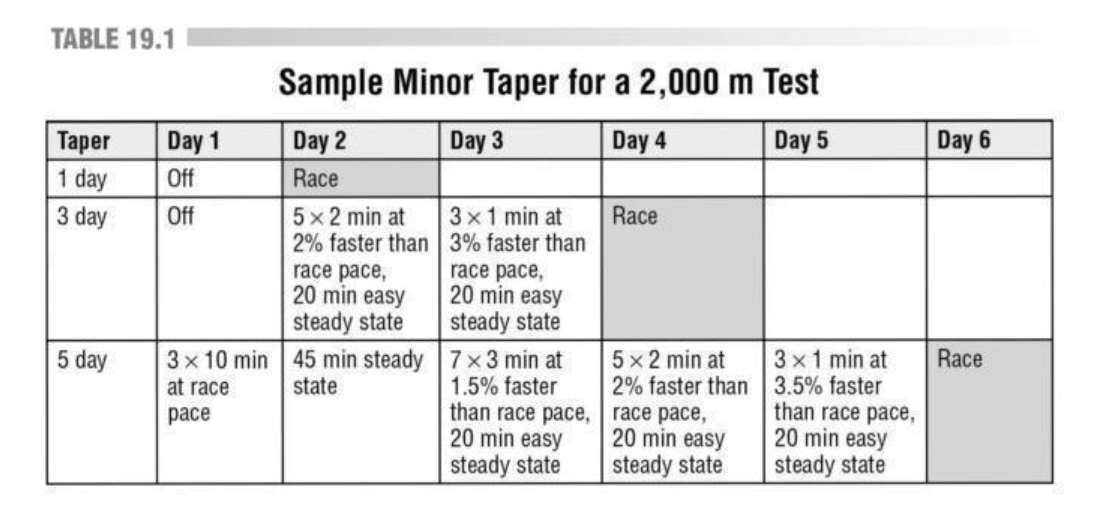
But back to minor tapers.  Here is a table of the three that were defined.

Screen Shot 2015-10-02 at 3.23.35 PM

The primary difference is that instead of doing the same type of interval and just reducing the number as you approach race day, you change the number, length and intensity of the intervals.

The type of taper is driven by your training load.  A 1 day taper for athletes training 6 to 10 hours a week.  3 days for athletes training 10-15 hours.  5 day taper is for those hardy souls training more than 15 hours a week.  I checked my log and I am training about 7 to 10 hours a week, so I guess in Ed’s world, I don’t need or deserve a taper.  I actually think this is an elite versus masters kind of difference.  The amount of taper you need is probably driven by how much recovery you need from whatever training load you are carrying.

The 1 day taper is a misnomer.  It just means that you take a complete rest day the day before the race.  I don’t like that idea much.

The 3 day taper seems simple enough.  It seems like 5 x 2′ at faster than race pace might be a bit harrowing.  I did 4 x 2′ at 2k pace on the erg and I don’t think I could have done them 2% faster (1:38 vs 1:40 pace).  Maybe an elite athlete could.  The 3 x 1′ at 3% faster than race pace looks pretty cool, and I think the 20 minutes of steady state is probably about the same as the warmup and cooldown from the Shepley paper.

I have to admit some confusion about the 5 day taper.  This is a taper for a 2000m race, which will probably take somewhere between 6 and 8 minutes.  So how is it possible to do 3 x 10 minute intervals at race pace.  I have to assume that is a typo.  If you can do 10 minutes at race pace, it isn’t race pace. After that there is a steady state session, then 7 x 3′ at faster than race pace, which I would not be capable of doing on my best day.  Then the 5×2′ and then the 3×1′ sessions from the 3 day taper.

How would I apply this to my world?  I honestly don’t know.  I think that I would probably look at the 3 day taper and ignore the other ones.  For the 3 day taper, I would need to adapt it by adjusting the pace targets.  I would target about race pace for both the 2′ and 1′ intervals.

Unlike the Shepley paper, there is no real evidence presented about the effectiveness of the taper versus other approaches, so it is hard to judge how well it works, but Ed McNeely certainly has impressive credentials so you could do worse than to trust his advice (other than the 3×10′ at race pace thing).

By the way, Rowing Faster is a great book.  I have the kindle version of the 2nd edition.

Friday: Windy Warmup – Racing Tomorrow

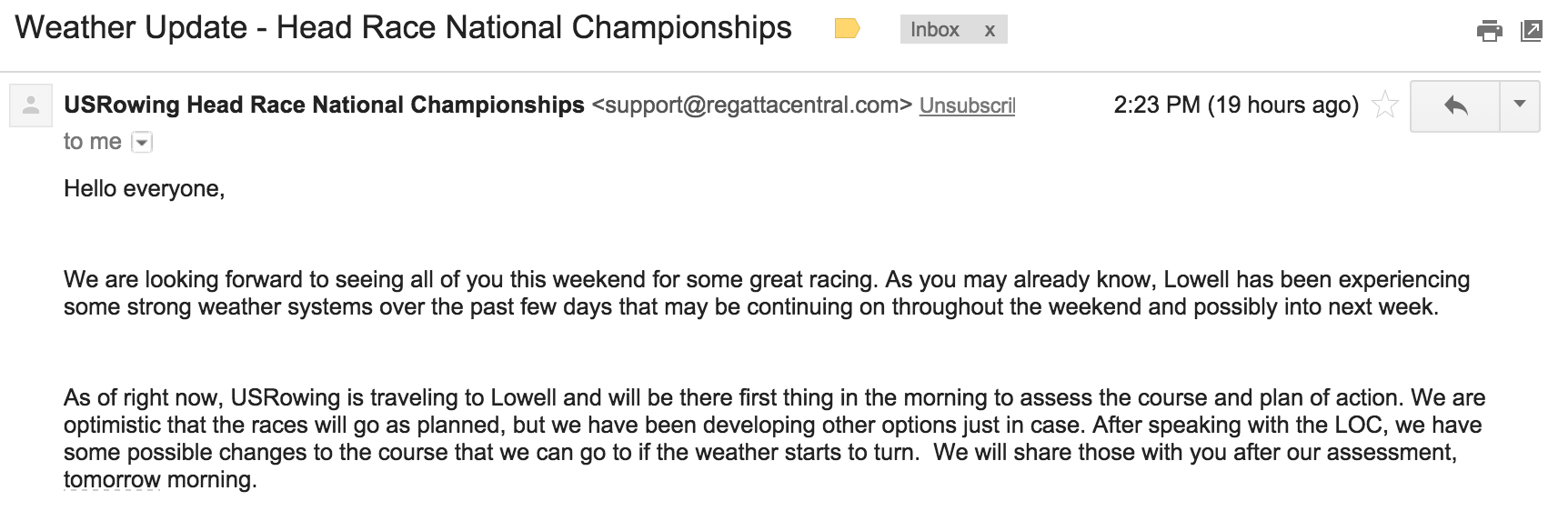
I got this email from my friends at USRowing yesterday.

Screen Shot 2015-10-02 at 9.40.48 AM

So, I guess it’s probably going to be windy!

Today was another chance to get a little wind/chop practice in before the race.  I really didn’t have much of a plan, just a thought that I would do a couple of intervals at head race rate and pressure in the parts of the river that had the worst wind and water.

The wind today was blowing more from the West, which is a quartering head wind on the longer stretches.  The chop was worse than yesterday and I struggled getting clearance above the wavetops.  In the bigger gusts I had a lot of trouble maintaining the rate.  The real issue was trying to be very careful about blade placement at the catch before I loaded up.  There was a real chance of missing water if I hit a trough wrong.

I ended up doing 2 600m intervals.  I was a little low on rate, but the pressure was about right and in the second one, I got more comfortable with getting the blades nice and high on the recovery.  It’s nice to know that I still have a lot of opportunities to get better at sculling!  I’d hate to think that I’d mastered this sport.

Screen Shot 2015-10-02 at 8.49.01 AM Screen Shot 2015-10-02 at 8.48.46 AM

Start_|_Dist_|_Split_|_Pace_|_Strks__|_Rate_|_DPS_|_AvgHR_|_Remarks
00020_|_1360_|_07:23_|_2:43.0_|_137___|_18.5_|_09.9_|_127___|_w
01380_|_0600_|_02:48_|_2:20.3_|_069___|_24.6_|_08.7_|_154___|_m
01980_|_0460_|_02:22_|_2:34.5_|_049___|_20.7_|_09.4_|_142___|_r
02440_|_0600_|_02:50_|_2:21.7_|_070___|_24.7_|_08.6_|_159___|_m
03040_|_3360_|_16:40_|_2:28.8_|_351___|_21.1_|_09.6_|_138___|_c

Dist__|_Time__|_Pace___|_Strks_|_SPM__|_DPS__|_AvgHR_|_Remarks
01360_|_07:23_|_2:43.0_|_137___|_18.5_|_09.9_|_127___|_warmup
01200_|_05:38_|_2:21.0_|_139___|_24.6_|_08.6_|_157___|_Main set
00460_|_02:22_|_2:34.5_|_049___|_20.7_|_09.4_|_142___|_rest meters
03360_|_16:40_|_2:28.8_|_351___|_21.1_|_09.6_|_138___|_cool down
06380_|_32:04_|_2:30.8_|_676___|_21.1_|_09.4_|_139___|_Total

Tomorrow:  Race Day!  My start time is 9:13.

Hourly forecast is for NNE winds 10-15mph

Screen Shot 2015-10-02 at 10.22.09 AM

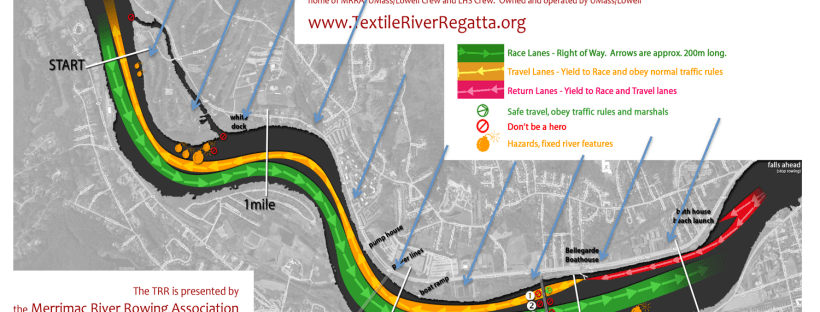
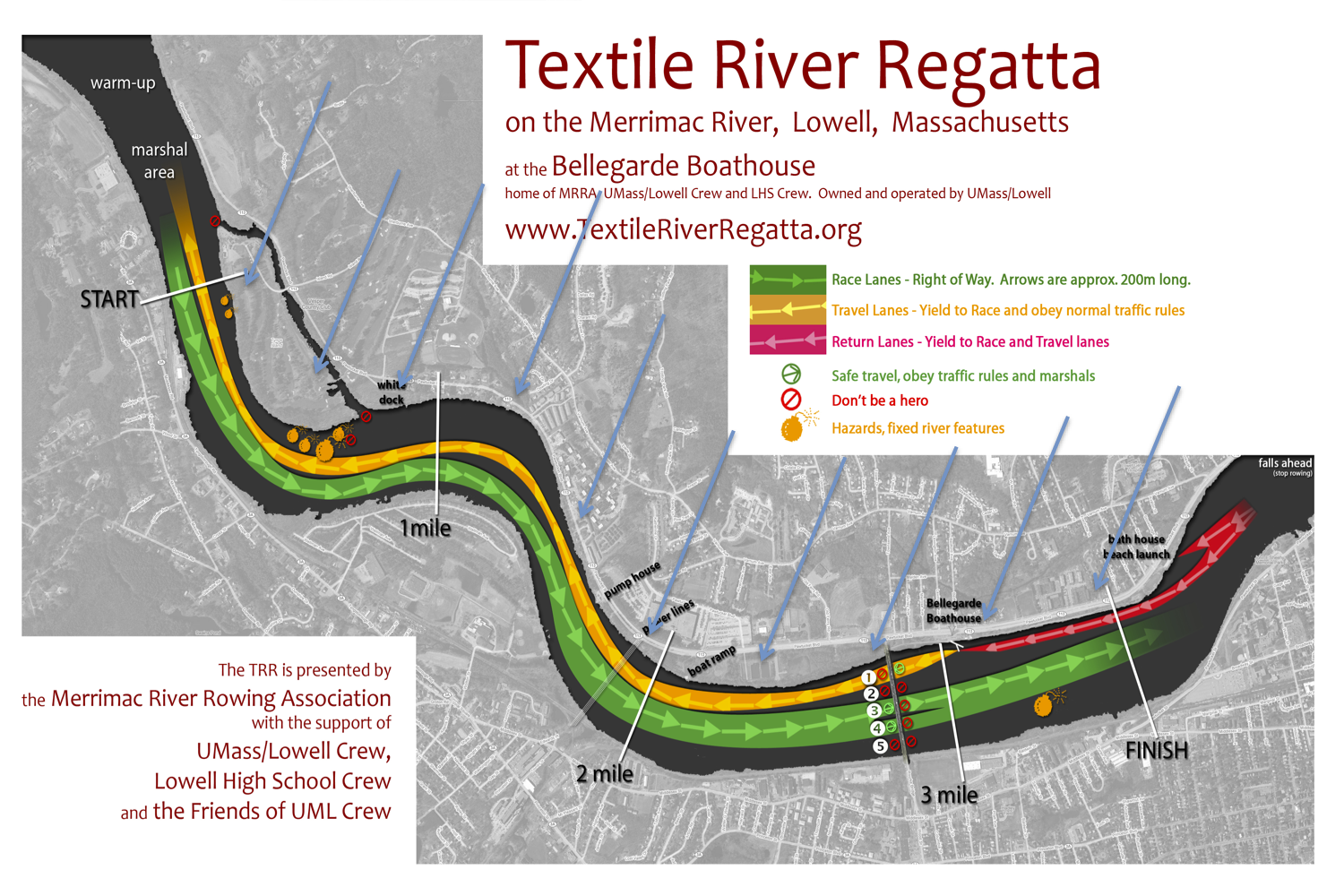
The wind direction is actually more favorable than I feared.  Mostly it’s a cross wind and the river width will keep the chop from getting too bad.  The last couple of km are a quartering head wind.  I think it will pay to hug the north shore as there might be some wind shadow, and the water will be flatter.

Lowell

Thursday: Taper..2 x 500m windy

Forecast for the weekend is for a brisk headwind, so today, I decided to take advantage of the elements to prepare.  It was a blustery fall day today.  Temps were in the low 50s and the there was a gusty NNW wind around 10mph gusting up to 15-20 at times.  This wind direction is a head wind on the widest, straightest part of the river, so I did my 2 little intervals right into the teeth of it.  I also started right at the downwind end of the stretch to get the worst possible chop.  Because the river is so shetlered, it wasn;t so bad, but it was noticeably unpleasant to row in.

Plan:

  1. Race style warmup with bursts at increasing stroke rates
  2. 2 x 500m with a 5′ or longer rest
  3. pace target: 2K race pace or better .. 2:00 (without wind or waves)
  4. rate target: 30

Screen Shot 2015-10-01 at 11.51.40 AM pace

Start_|_Dist_|_Split_|_Pace_|_Strks__|_Rate_|_DPS_|_AvgHR_|_Remarks
00020_|_3480_|_18:45_|_2:41.7_|_368___|_19.6_|_09.5_|_136___|_w
03500_|_0500_|_02:11_|_2:10.5_|_062___|_28.5_|_08.1_|_164___|_m
04000_|_1000_|_05:43_|_2:51.4_|_106___|_18.5_|_09.4_|_128___|_r
05000_|_0500_|_02:10_|_2:09.6_|_063___|_29.2_|_07.9_|_166___|_m
05500_|_2200_|_11:46_|_2:40.4_|_233___|_19.8_|_09.4_|_135___|_c

Dist__|_Time__|_Pace___|_Strks_|_SPM__|_DPS__|_AvgHR_|_Remarks
03480_|_18:45_|_2:41.7_|_368___|_19.6_|_09.5_|_136___|_warmup
01000_|_04:20_|_2:10.1_|_125___|_28.8_|_08.0_|_165___|_Main set
01000_|_05:43_|_2:51.4_|_106___|_18.5_|_09.4_|_128___|_rest meters
02200_|_11:46_|_2:40.4_|_233___|_19.8_|_09.4_|_135___|_cool down
07680_|_40:34_|_2:38.5_|_832___|_20.5_|_09.2_|_138___|_Total

That was a challenge.  Trying to get the rate up and row cleanly at full pressure was challenge, especially during the gusts.  I improved a bit over the 2 intervals getting a bit more clearance and smacking fewer wavetops, but I am still not all that comfortable rowing in chop.

In the first interval, I had to do some abrupt steering to thread the needle between a couple of Brandeis crews and a protruding headland.  I think it was more a case of information overload.  I was trying to judge where they were, and where the headland was (by the way, this is the place where I nearly ripped the skeg off my boat by cutting it too close once), maintain full pressure, and deal with the wind trying to take my blades and the chop making the catch tricky.  I don’t see a solution to that other than more practice in lousy conditions.

I paddled back to the same place to start the next interval.  This one was way more controlled and I rowed much better.  It was still slow, but for the conditions it was the best that I think I could do.  If I have this much headwind, I’ll be lucky to break a 2:20 average split for the race.

Tomorrow:  Warmup only then load the boat.

What the best way to taper for a race?

I’m sure that there are an infinite variety of ways to taper and just as many principles and theories about what works best to delivery peak performance on race day.  In the Wolverine Plan, Mike Caviston writes the following…

Tapering is the practice of reducing training volume & intensity prior to competition to ensure peak performance. While it is a common perception among athletes that a taper is necessary to allow maximal performance, this is not clearly supported by scientific research. The benefits of tapering are most evident in situations where athletes were clearly overtraining in the first place. In other words, the benefit is not so much the taper per se, but removing the negative effects of overtraining. In situations where training volume and intensity are properly controlled, the effects of tapering are less substantial. Now, this is not to say we won’t taper before important tests and competitions. We will. Rest assured that we have your best interests at heart. But some athletes expect a vacation and are disappointed when all they get is a modest reduction in a pretty demanding schedule. The fact is the only noticeable reduction in training will occur during the week prior to NCAAs. And the benefits are probably far more psychological than physical.

Needless to say, there are different view points, and in fact some research that contradicts this point of view.  For example this paper:

This paper is from 1992, and it is an interesting experiment.  It was a study of collegiate middle distance runners.  There were 9 participants that went through a 8 week training period where all of them followed the same training plan.  They were then divided into three groups of 3 and each group followed a different taper plan.  Then after four weeks they did another taper, and after 4 more weeks a final taper.  So each athlete used each taper once.  At the end of each taper, there was a series of performance and physiological tests including:

  • VO2Max
  • time to exhaustion at 1500m running pace
  • Strength
  • Blood lactate
  • Blood volume
  • Red Cell Volume

The three tapers were all 7 days long, day 1 and day 6 were both rest days.  The Low Intensity and High Intensity tapers both included warm ups in addition to the details below.

  • rest only
  • Low Intensity: 10km run at 57 to 60% VO2Max on day 1, 8km on day 2, and so on.
  • High Intensity: 5 x 500m interval at 115% VO2Max with 6 to 7 minutes rest between.  This is roughly 75 seconds of running in each interval, at roughly 1500m pace.  On day 2, 4×500, and so on.

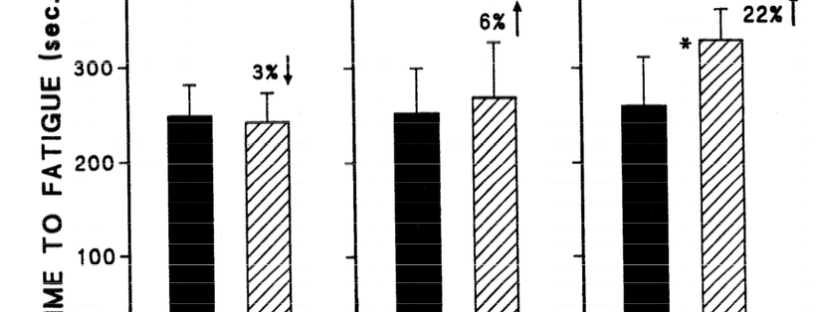
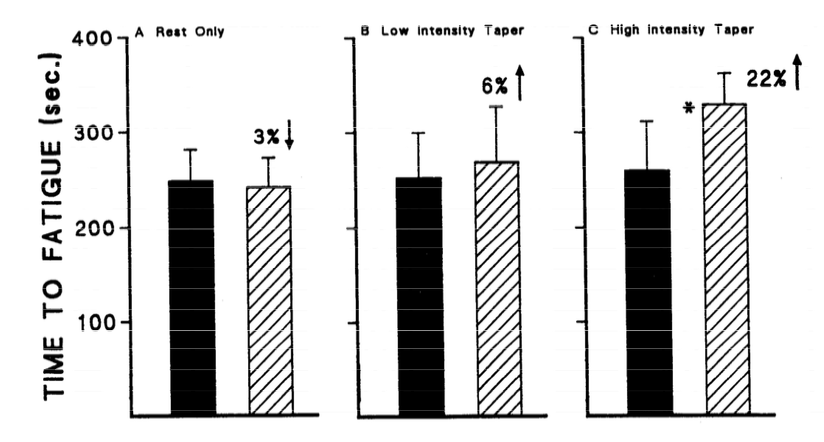
The results are interesting.  Here is the money plot.

Screen Shot 2015-09-30 at 9.26.01 AM

The rest only taper resulted in a 3 percent decline in performance relative to tests right before the taper. A low intensity taper resulted in a 6% improvement. The high intensity taper resulted in a 22% improvement in time to exhaustion at 1500m pace.

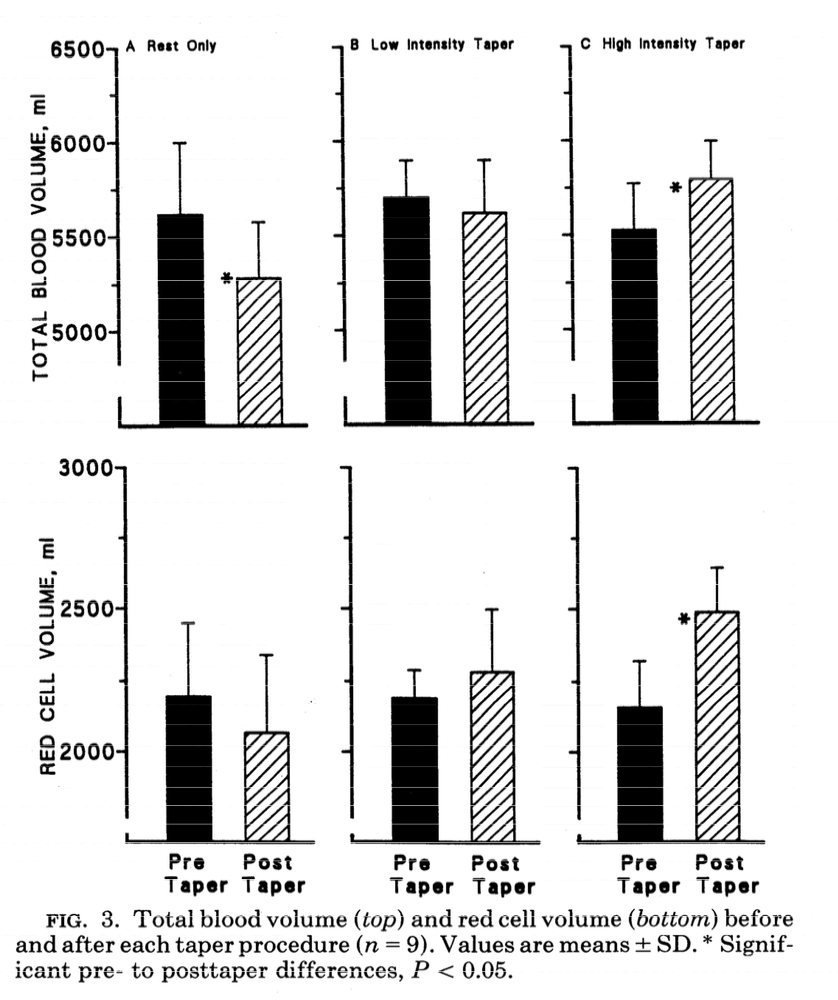
This performance measure is backed up with the blood tests.

Screen Shot 2015-09-30 at 9.30.02 AM

Both blood volume and red cell volume were increased the most in the HIT group.

Based on this paper, I plan out tapers simply by counting back from race day as follows

  • Race day
  • rest day
  • 2 x 500 (or 1:30) with 5 min rests
  • 3 x 500 (or 1:30) with 5 min rests
  • 4 x 500 (or 1:30) with 5 min rests
  • 5 x 500 (or 1:30) with 5 min rests
  • rest day

I would do this for the most important race of a season.  For less important races, I would shorten the taper by 2 days and start with the 3 x 500.

I’d like to thank Ben Redman for pointing me to this paper.

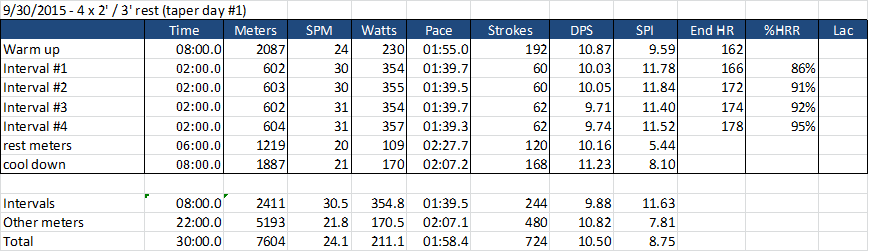
Wednesday AM: 4×2′ / 3′ rest (on the erg)

I was suited up and ready.  I didn’t mind the wind (15-20mph) or the rain (torrential), but when I looked at the weather radar and saw that there were thunderstorm cells heading my way, I decided that doing the session on the erg would be the wiser (if less exciting) option.

I am tapering for the head race this weekend, and the best data that I have seen is that maintaining the intensity while cutting down the duration is the most effective way to maximize VO2Max on race day.  So, day 1 of the taper is:

Plan:

  1. 4 x 2′ / 3′ rest
  2. rest taken as 30 seconds passive, 2′ active at 2:30 pace, 30 passive
  3. pace target: <1:40 (2K race pace)
  4. rate target ~ 30

Screen Shot 2015-09-30 at 8.34.56 AM

4x2

I did a 8 minute warmup.  basically 2:00 pace with 5 to 10 stroke bursts at 1:40 each minute.  It got the blood flowing and opened up the lungs.

Then into the main event.  The first interval was fine.  It started to bite in the last 30 seconds or so.  The next one bit with about 45 seconds to go, and so on.  The last interval was pretty tough through the whole last minute.  But there were no HD demons in intervals this short and very little pace fading at the end of each.  I was glad when it was over, but I felt like I had more to give.  The right feeling for a taper workout I suspect.

I did a “Happy Ending” cooldown.  8 minutes total.  The first 2′ at 2:00 pace, then slowed to 2:05 for 2′, then 2:10, then 2:15 for the last 2′.  I really like these cooldowns.  They go by fast and I feel so much better if I do them instead of just walking away after the main set.

Tomorrow:  3 x 2′ / 3′ rest – hopefully on the water.

Forecast for the weekend is now very confused.  Half the forecasters think we are going to be hit with Hurricane Joaquin.  The other half are scratching their beards thoughtfully and saying “hmmm”.