
The first article compares the lactate clearance rate for different intensity of cool downs. The experiment was a 10 minute warm up, then a 5 minute test at 90% of VO2Max, then straight into one of the cool down scenarios ranging from passive to 100% of LT power for 32 minutes with lactate tests performed during the cool down.
Here is the key graph.
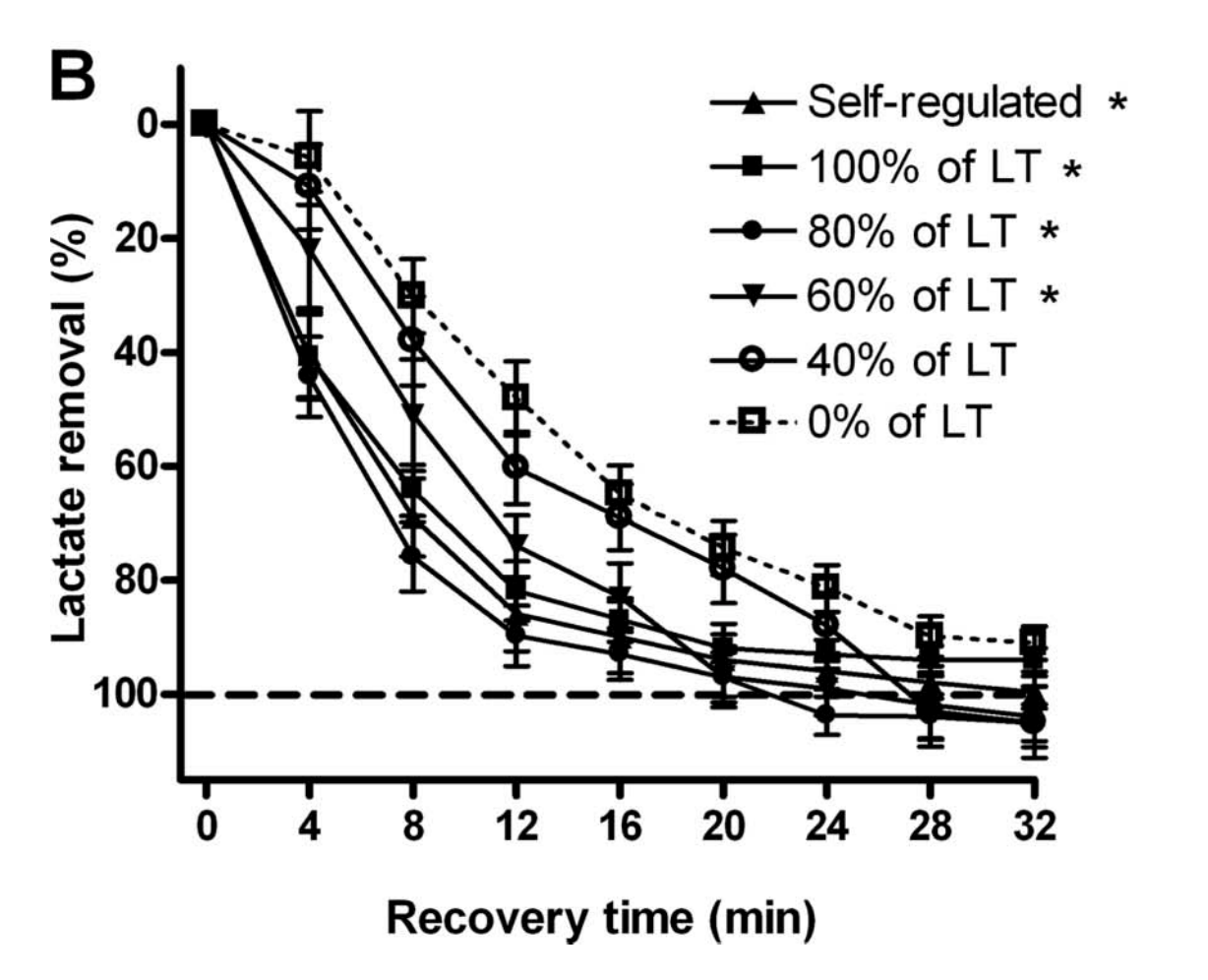
It shows that a cooldown at 60% or greater of LT power clears lactate significantly faster than passive or 40% of LT power. LT power is about the power that can be sustained for a 30 minute time trial. For me on the erg, right now, LT is probably around 250W, so a cooldown power greater than 0.6*250 = 150W (2:12.6 pace).
The second paper is based on triathletes. The protocol here was very similar. A 3 minute warmup, followed by a 6 minute test at about 90% VO2Max, then straight into the different cool down scenarios. This paper defines the cool down intensity in terms of above, at or below the IVT (Individual Ventilatory Threshold), basically an intensity where your breathing gets very regular and deep. This was all a bit too mumbo-jumbo-ish for me, but luckily they included a handy translation table to get from their weird units to % of VO2max.

The findings were that the lower intensity IVT(-50%delT) provided optimal lactate clearance.
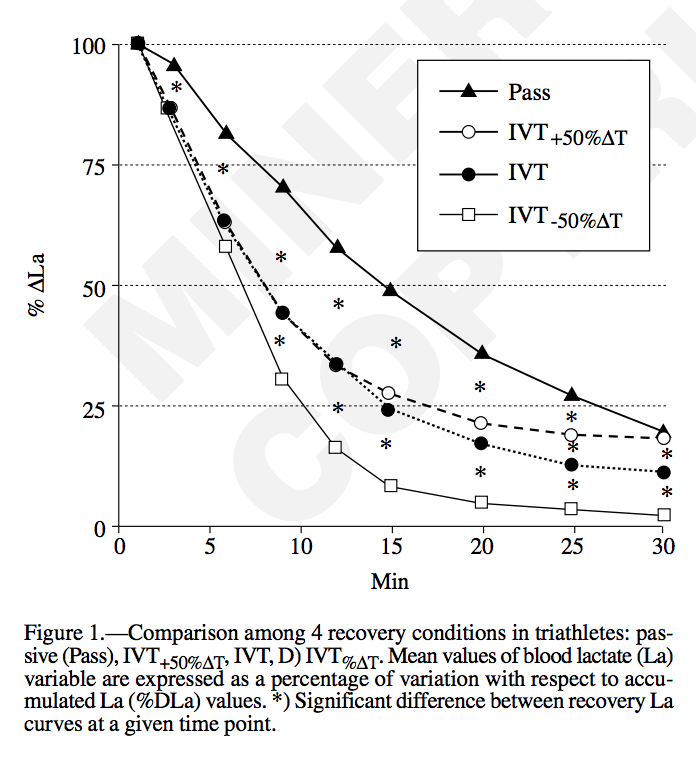
So, if you use 2K power as a rough equivalent to VO2Max power, then you can come up with “real” numbers to use for comparison. My current 2K is probably around a 6:50, which is 1:42.5 pace and 325W. So, these intensities would be:
- 67% * 325 = 218
- 59% * 325 = 192
- 51% * 325 = 166
So, this paper says 166W, which is a 2:08.2 pace
So put it together, these two papers say that I should go faster than 2:12.6 and no faster than 2:08.2. I think 2:10 is probably a good pace for my cool downs based on my current fitness level.
 Quantified Rowing